Darcy IR Portal
Darcy that gives sponsors a way to share deal diligence through interactive investor portals instead of static PDFs and scattered email threads
Product Designer
- Solo Designer
- 2 Engineers
- 1 AI/ML Engineer
- 1 Product Manager
Dec 2024 – March 2025
- Designed the end-to-end IR Portal feature within Darcy, covering investor onboarding, AI-powered Q&A, engagement analytics, and access control
- Conducted stakeholder interviews and early usability testing that surfaced the three core insight–decision pairs shaping the entire feature
- Designed the magic-link authentication flow that eliminated signup friction, which early drop-off data proved was make-or-break for engagement
- Framed the AI assistant as augmentation rather than automation (finding what's already in the diligence package vs. generating new answers), shifting investor trust scores from 42% to 89%
- Designed the source citation system ensuring every AI response and KPI carries explicit document references with one-click deep links
- Built the engagement analytics layer (time per section, question volume by topic, funnel conversion) that gave sponsors their first real signal of investor intent
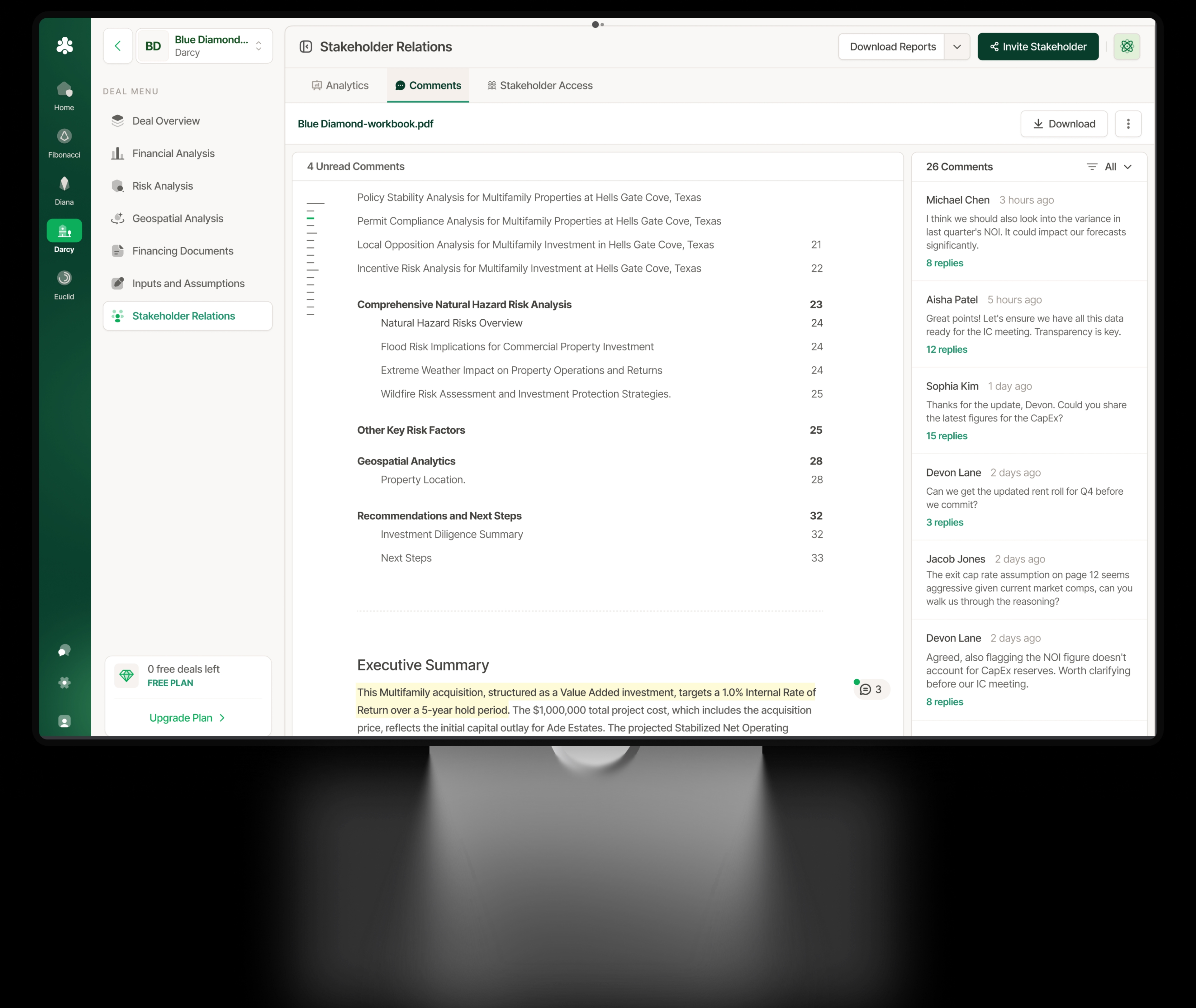
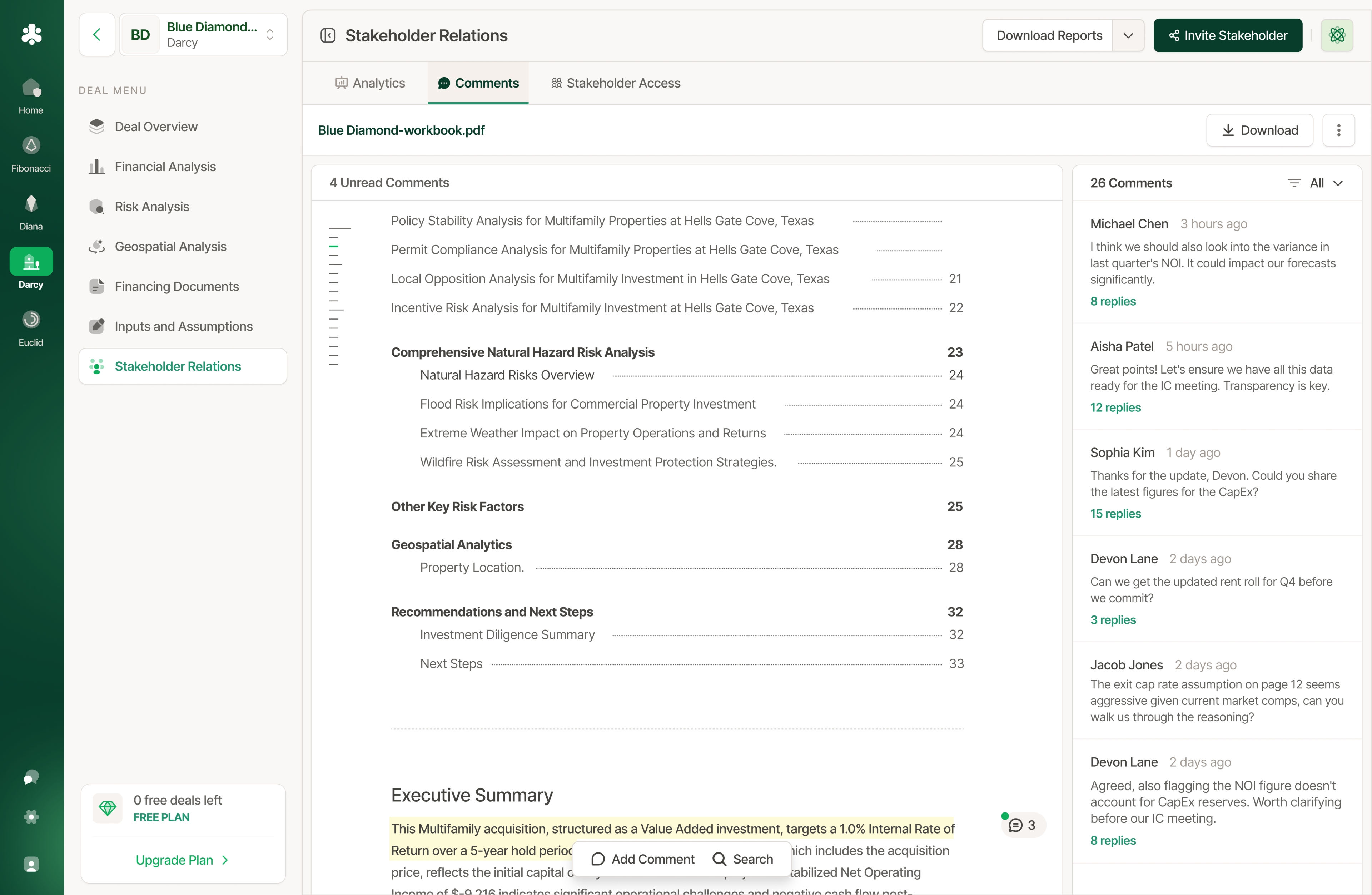
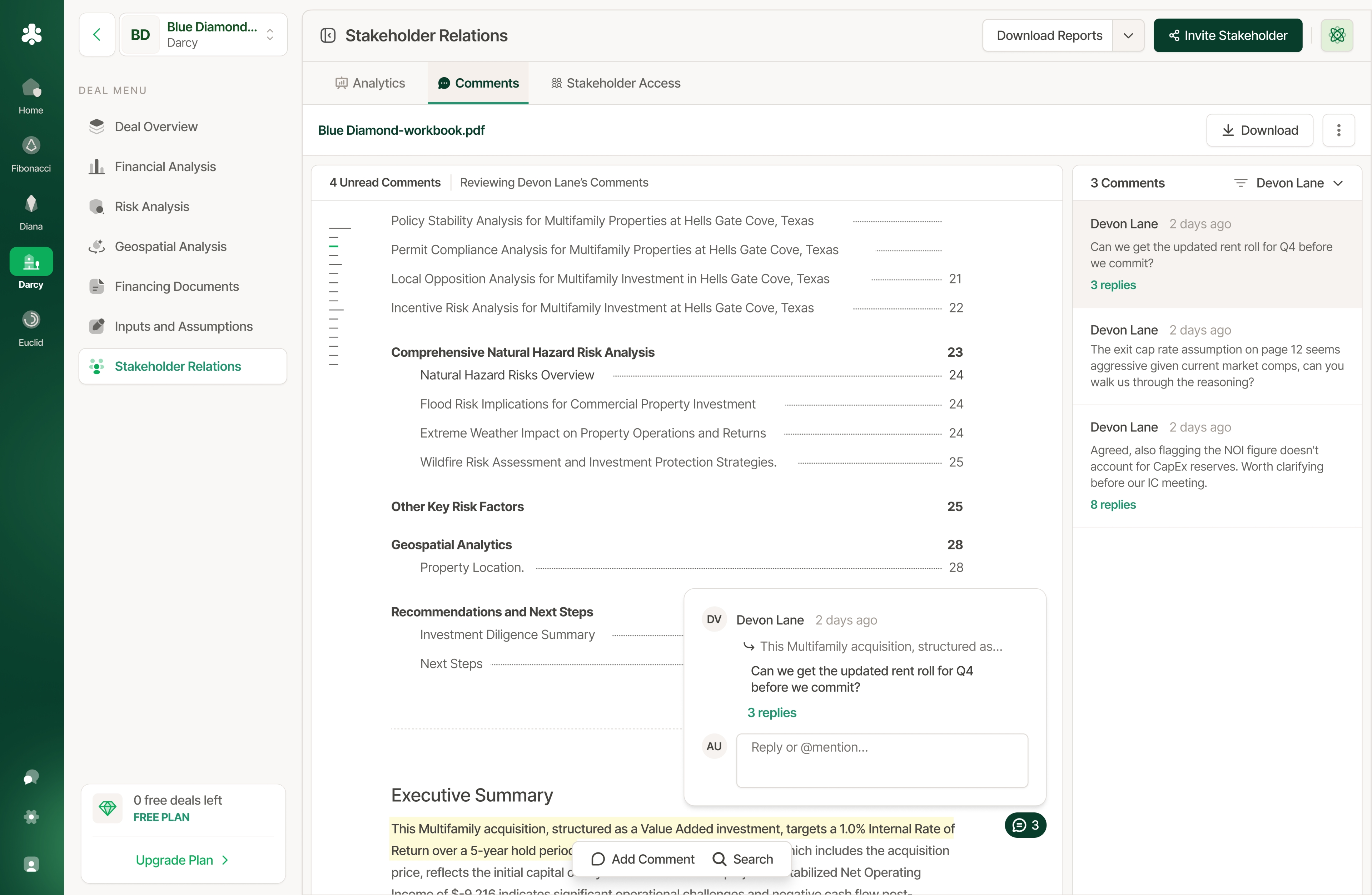
- Designed comment threads as intent signals, letting sponsors filter by stakeholder, see reply counts, and identify which sections generate the most discussion
Real estate sponsors share deal diligence with investors through static PDFs, spreadsheets, and email threads, creating a broken experience on both sides. IR teams spend 60%+ of their time answering the same questions repeatedly, while investors wait days for answers and have no way to verify the numbers they're shown. I designed the IR Portal to turn a sponsor's existing diligence materials into a live, queryable investor portal with AI-powered Q&A, traceable source citations, and real-time engagement analytics, reducing IR workload by 70% and shifting investor trust scores from 42% to 89% in beta testing. The design challenge wasn't just surfacing information; it was making complex financial diligence explorable and trustworthy without adding friction to an already sensitive, high-stakes fundraising process.
Real estate sponsors rely on PDFs, spreadsheets, and email threads to share deal diligence with investors. This creates a broken experience on both sides:
- •
IR teams spend 60%+ of their time answering the same questions repeatedly
- •
Investors wait days for answers to basic diligence questions
- •
Investors have no way to verify claims, numbers exist without context, sources, or traceability
- •
Sponsors have zero visibility into what investors actually review or care about
The Core Challenge:
The challenge wasn't just surfacing information, it was making complex financial diligence explorable, and trustworthy without adding friction to an already sensitive, high-stakes fundraising process. The answer was to meet sponsors where they already were.
Through stakeholder interviews and early usability testing, three patterns emerged that shaped the entire feature:
- —Insight: Most investor questions cluster around the same 4–5 themes: risk, returns, downside protection, track recordDecision: Pre-surface answers with AI-generated suggested questions tied to these exact topics
- —Insight: Metrics without source references increase skepticism rather than confidence, context matters more than numbersDecision: Every AI response includes explicit document citations and one-click deep links to underlying data
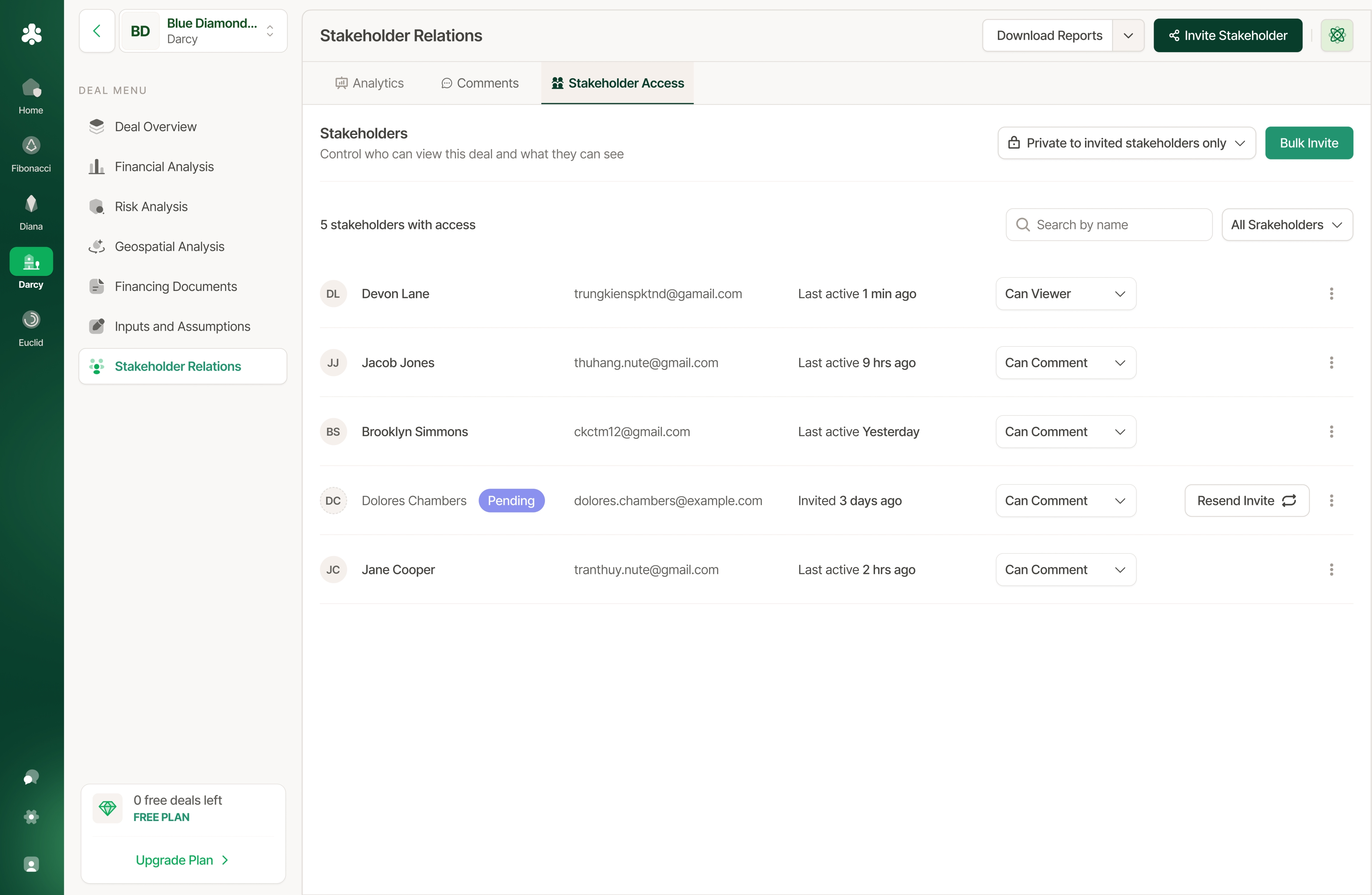
- —Insight: Access friction kills engagement. Passwords and account creation caused massive drop-off during early deal reviewDecision: Magic-link authentication, no signup required. Role-based permissions managed by sponsors in real time
The solution turns a sponsor's existing diligence materials into a live, queryable deal portal, without asking them to rebuild anything from scratch.
The design challenge was to add intelligence and interactivity without adding complexity, for either side.
1. The invite link is the first impression. The portal is the pitch
- •
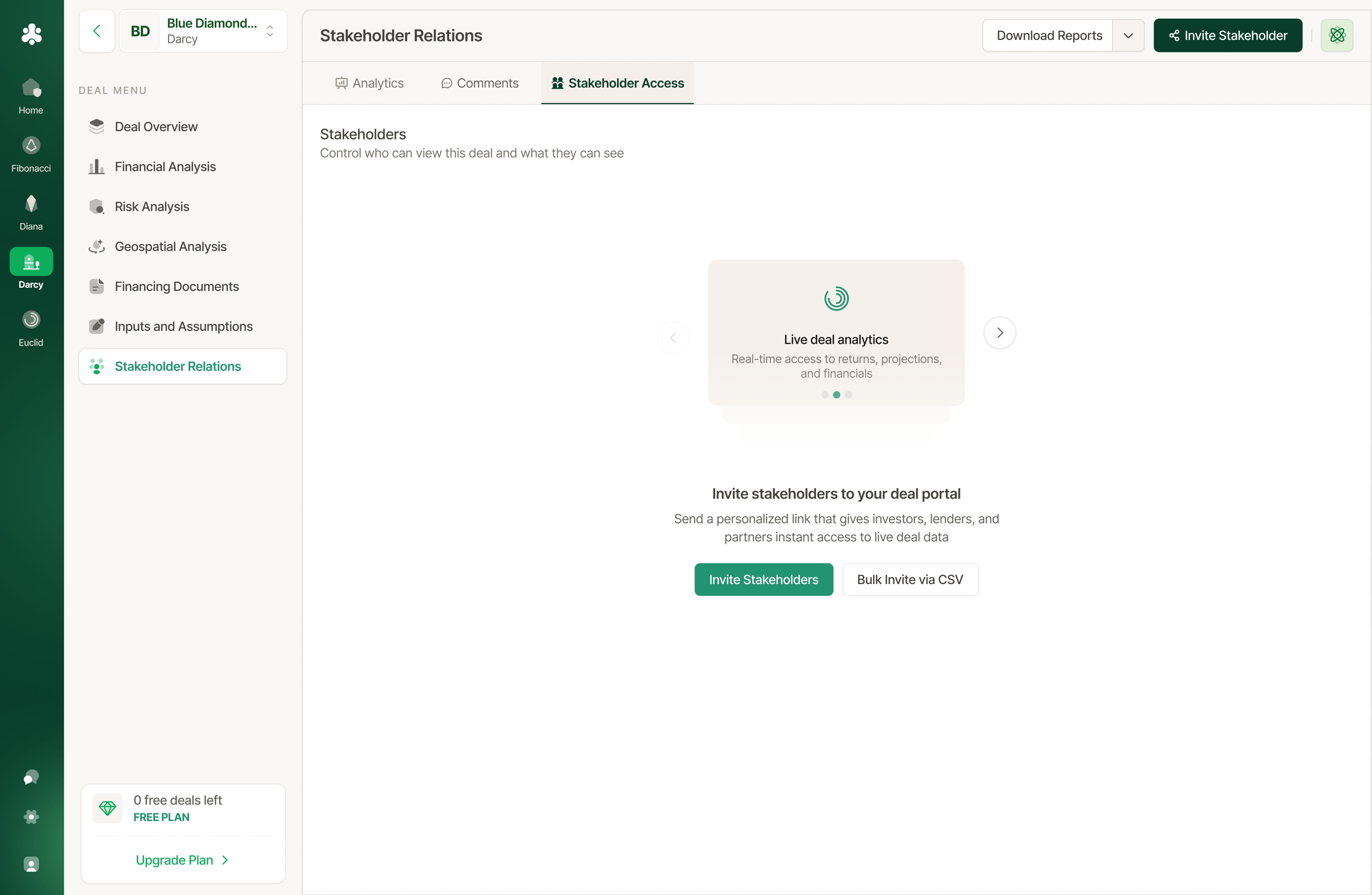
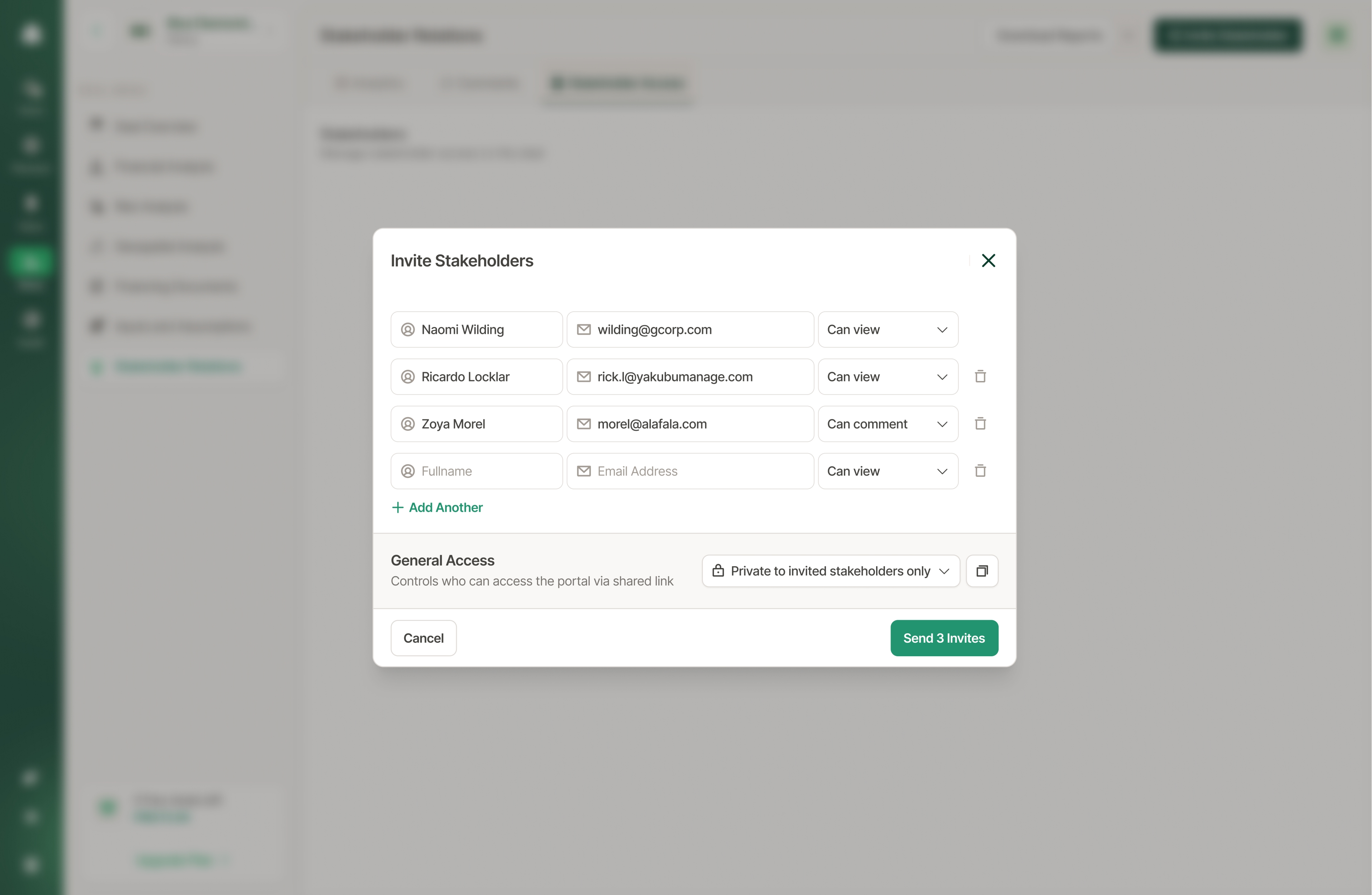
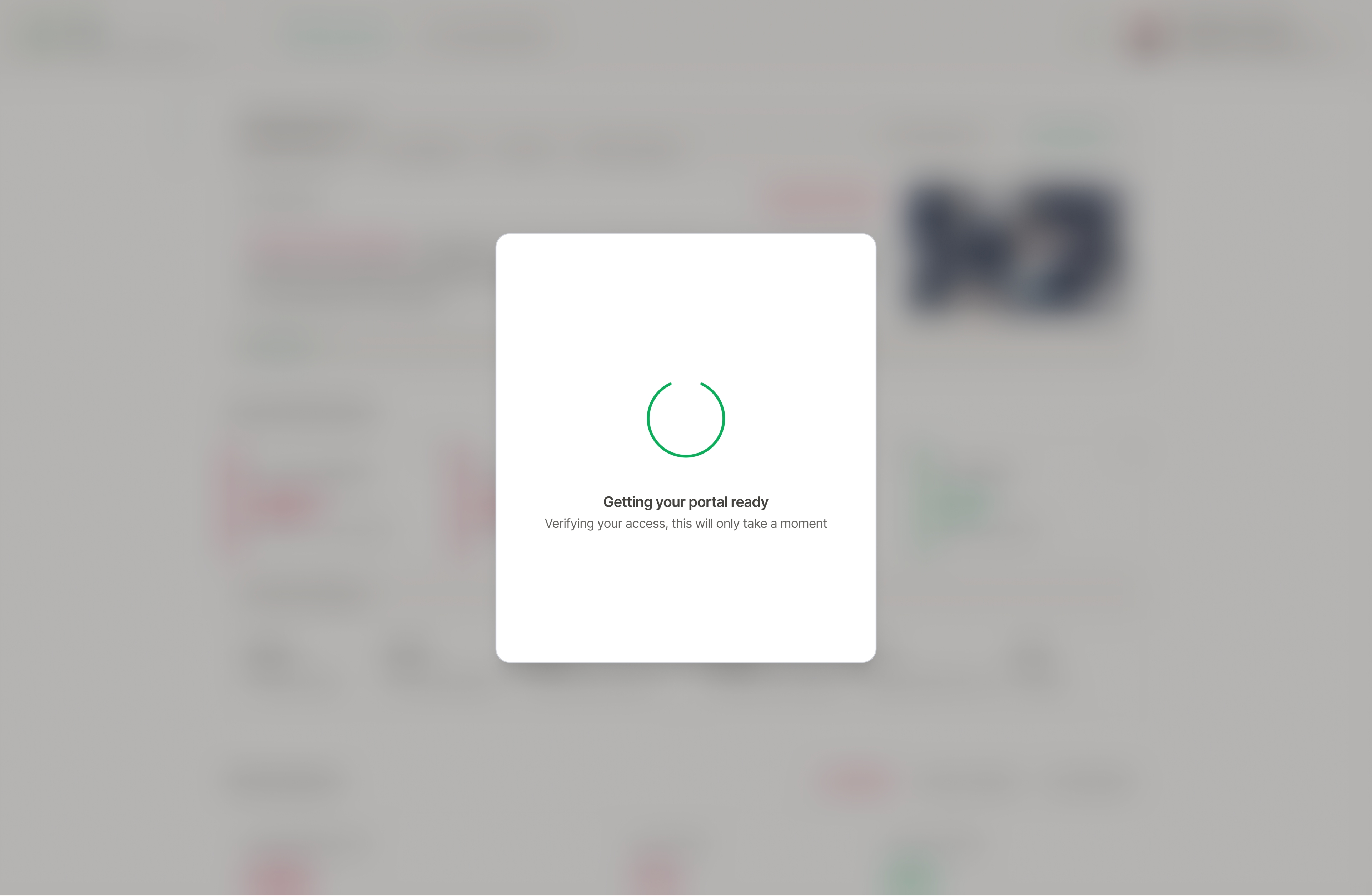
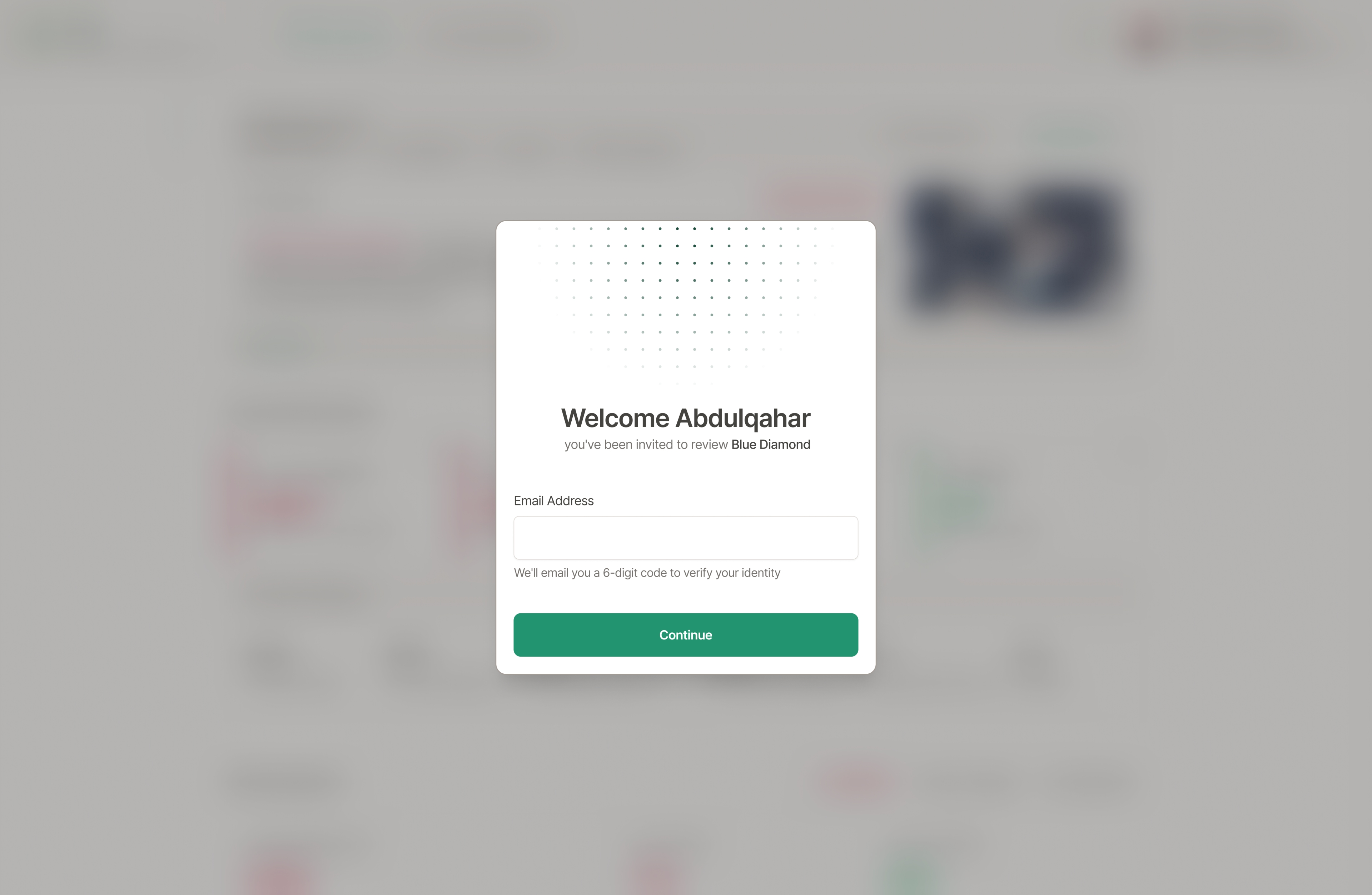
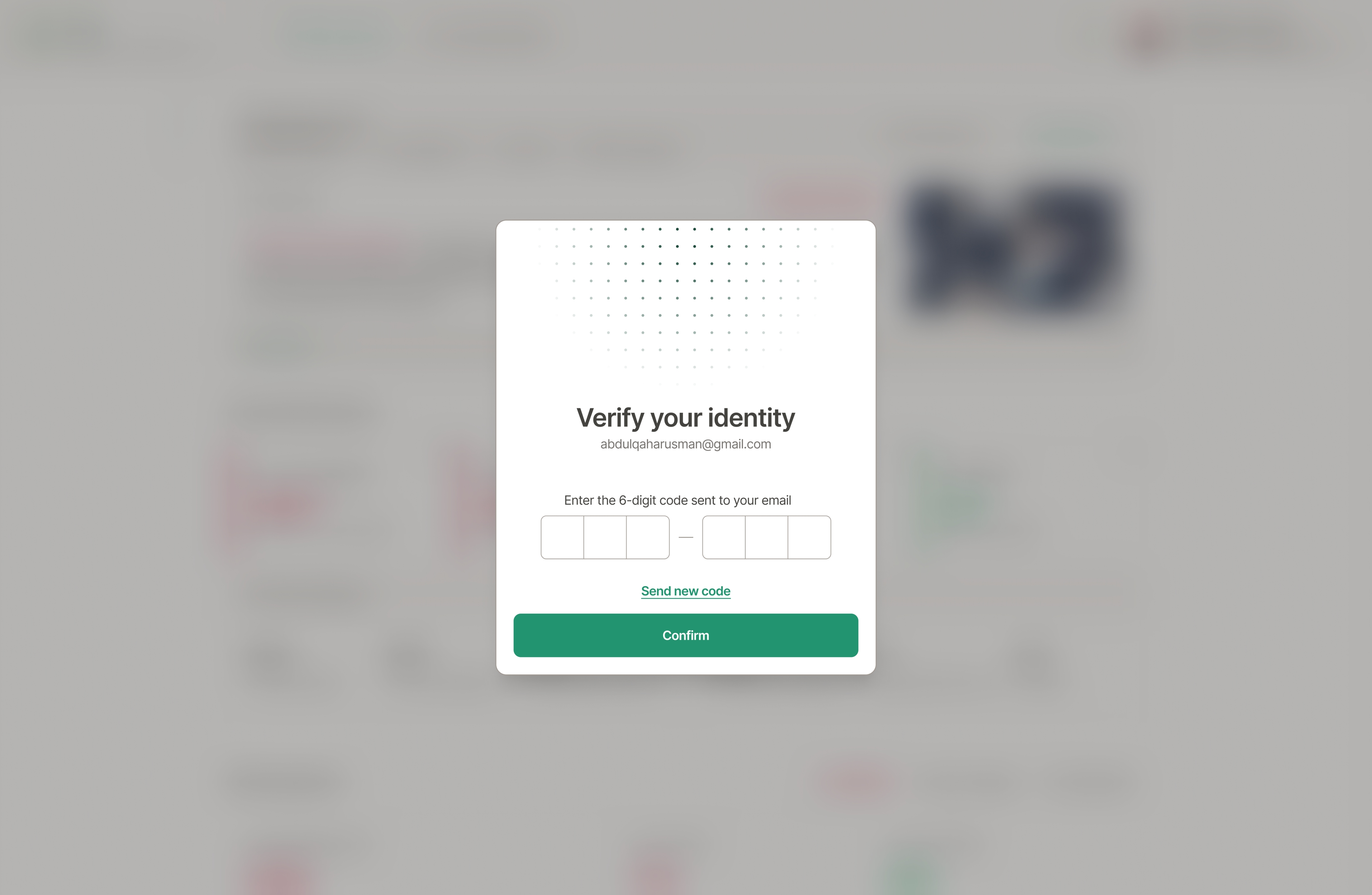
The entire stakeholder experience begins with a single link. From that moment to being inside the deal takes under 60 seconds, click the invite link, enter your email, enter a one-time code. No account creation, no password.
- •
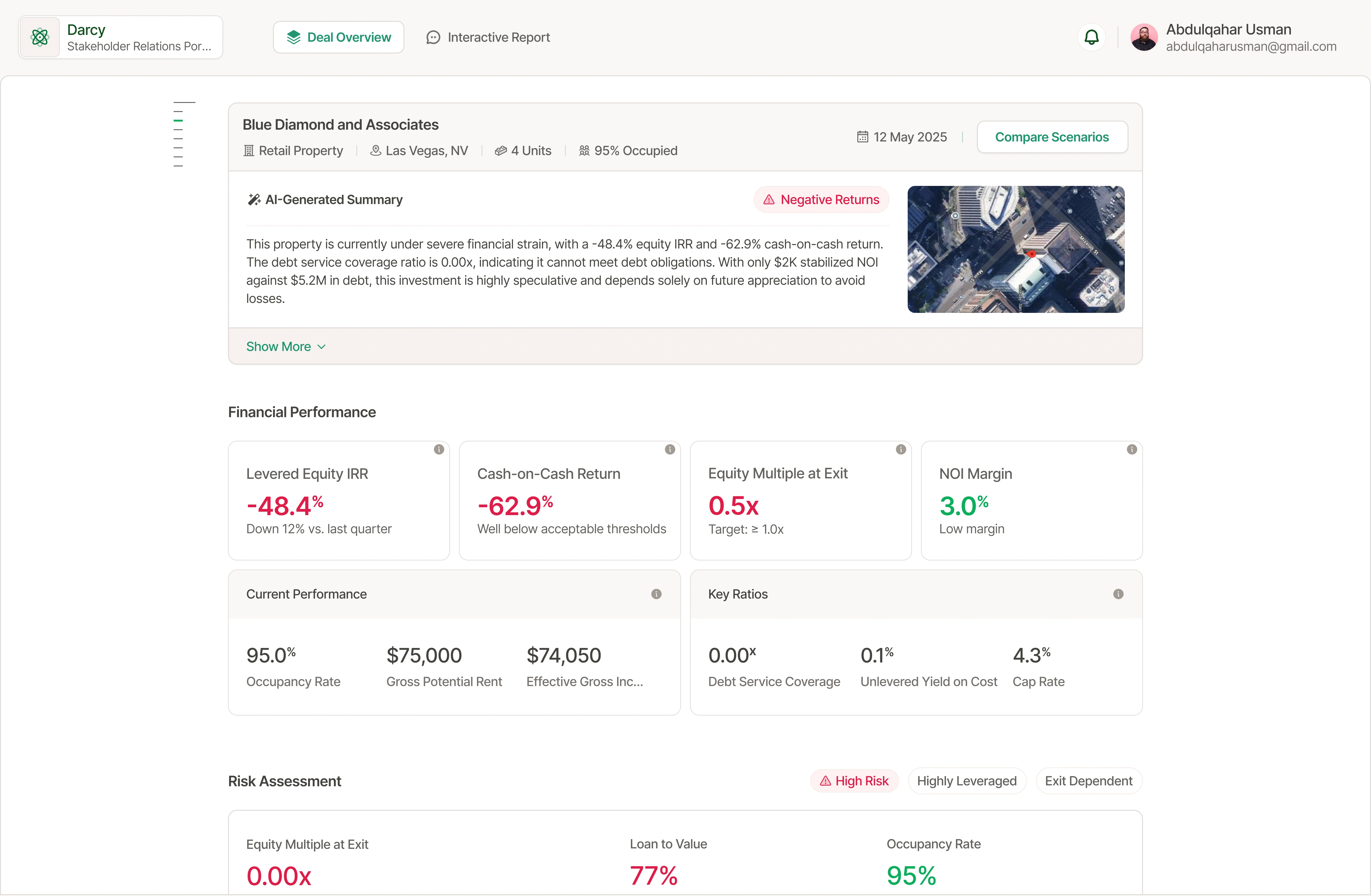
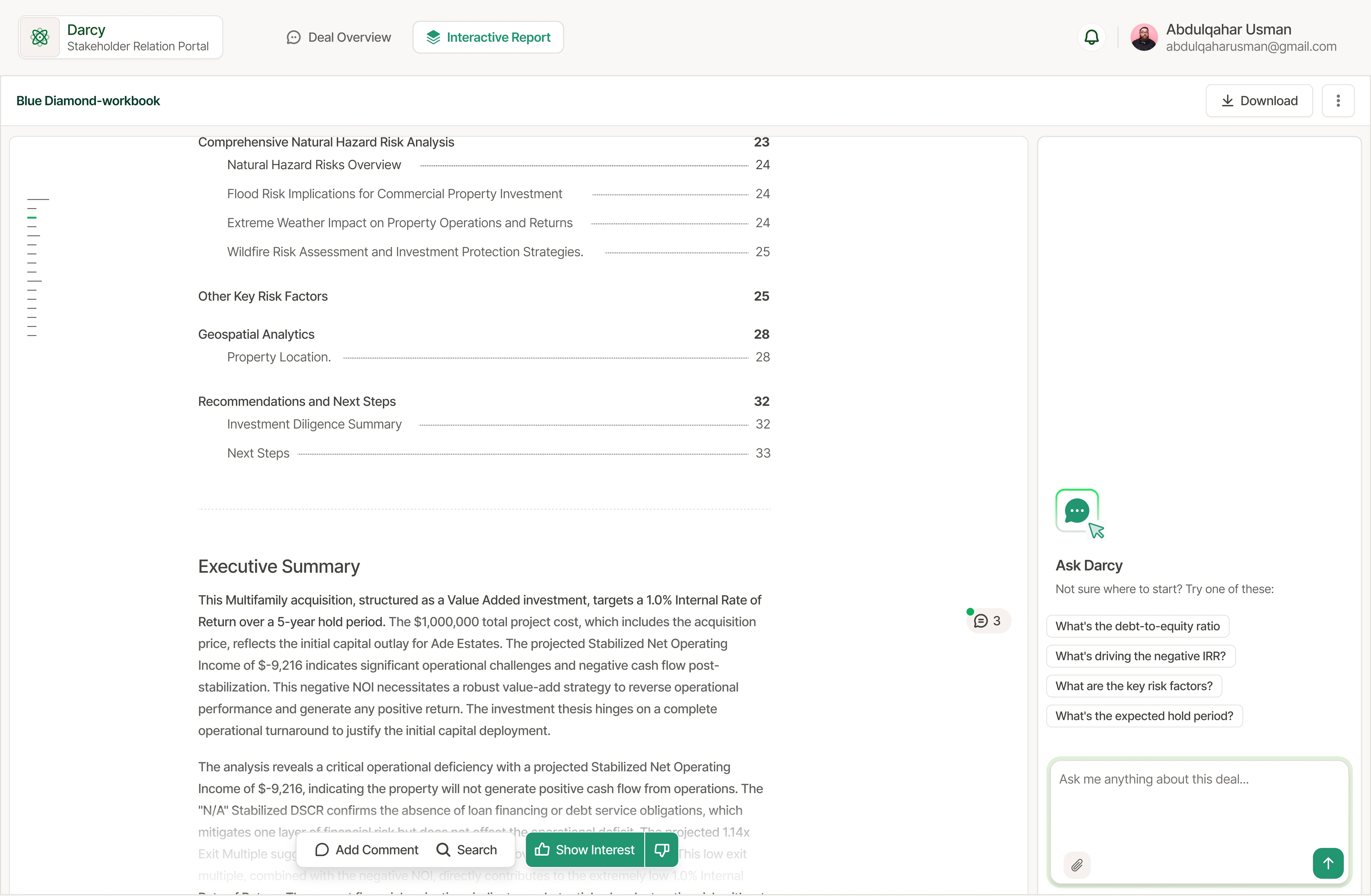
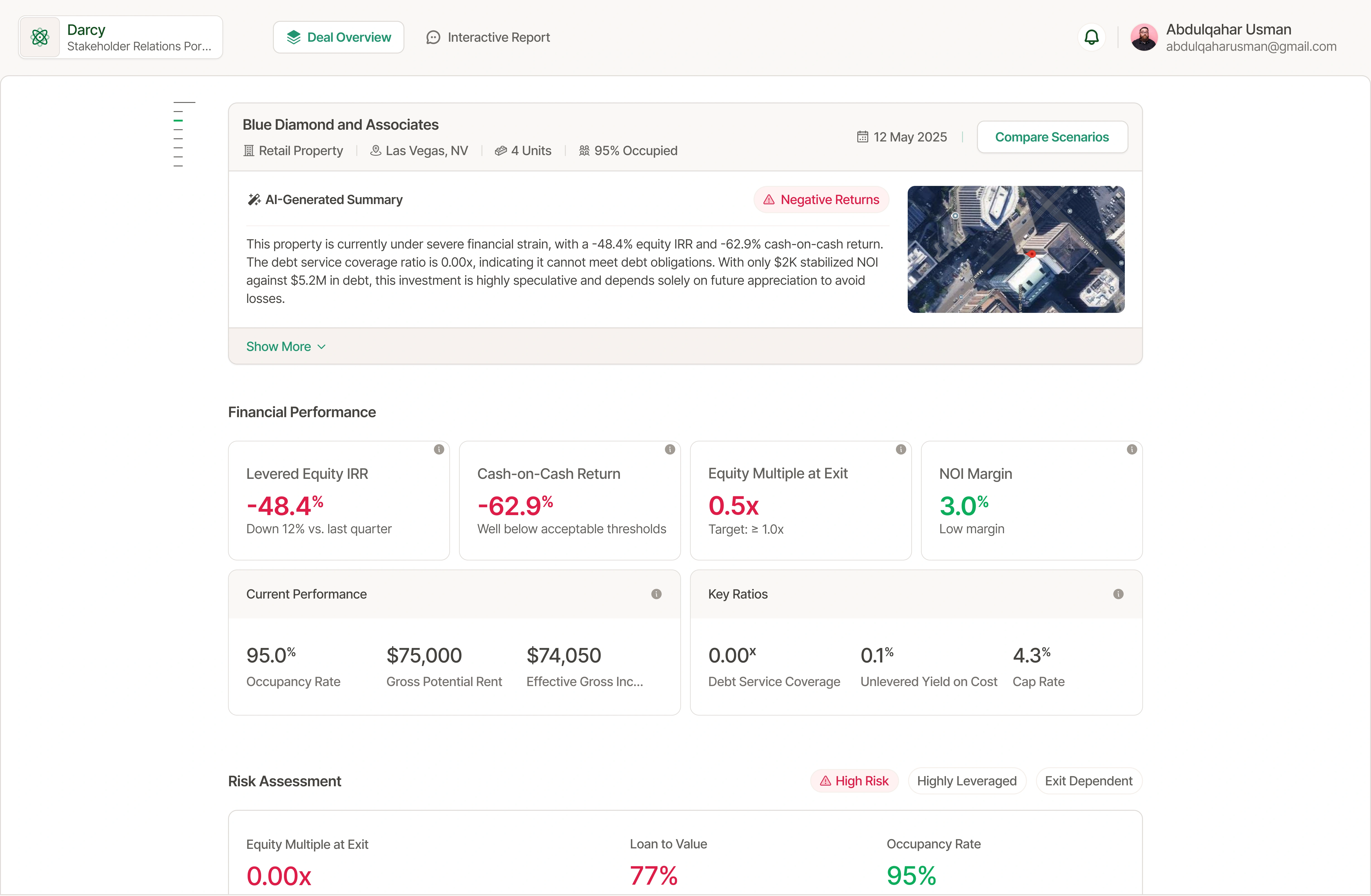
Within the first minute a stakeholder sees the deal name, a branded AI-generated summary, live financial KPIs, a risk assessment, and a conversational AI assistant ready to answer their questions.
- •
Role-based permissions are set by the sponsor at the point of invitation.
2. Every number is traceable to its source
- •
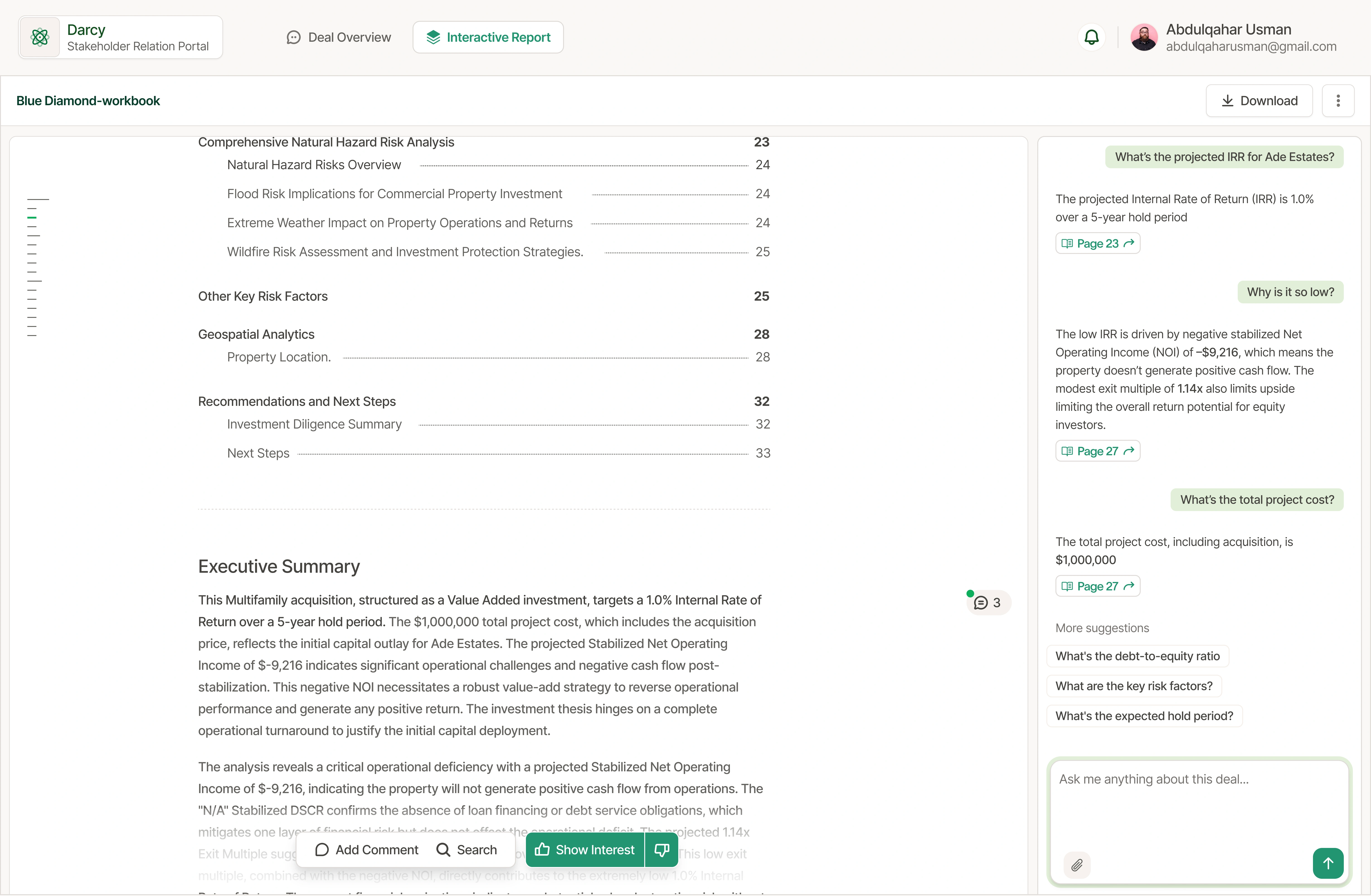
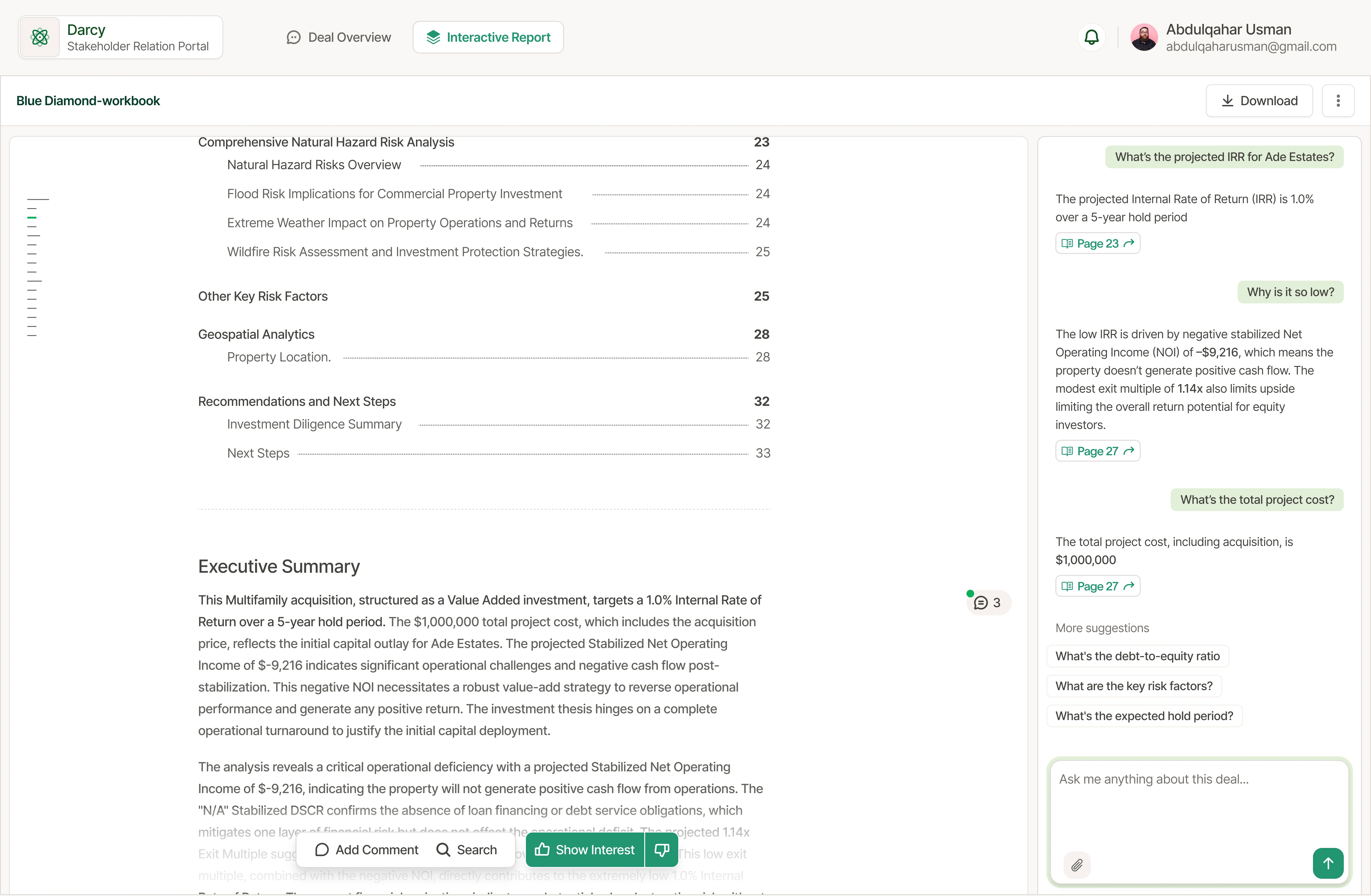
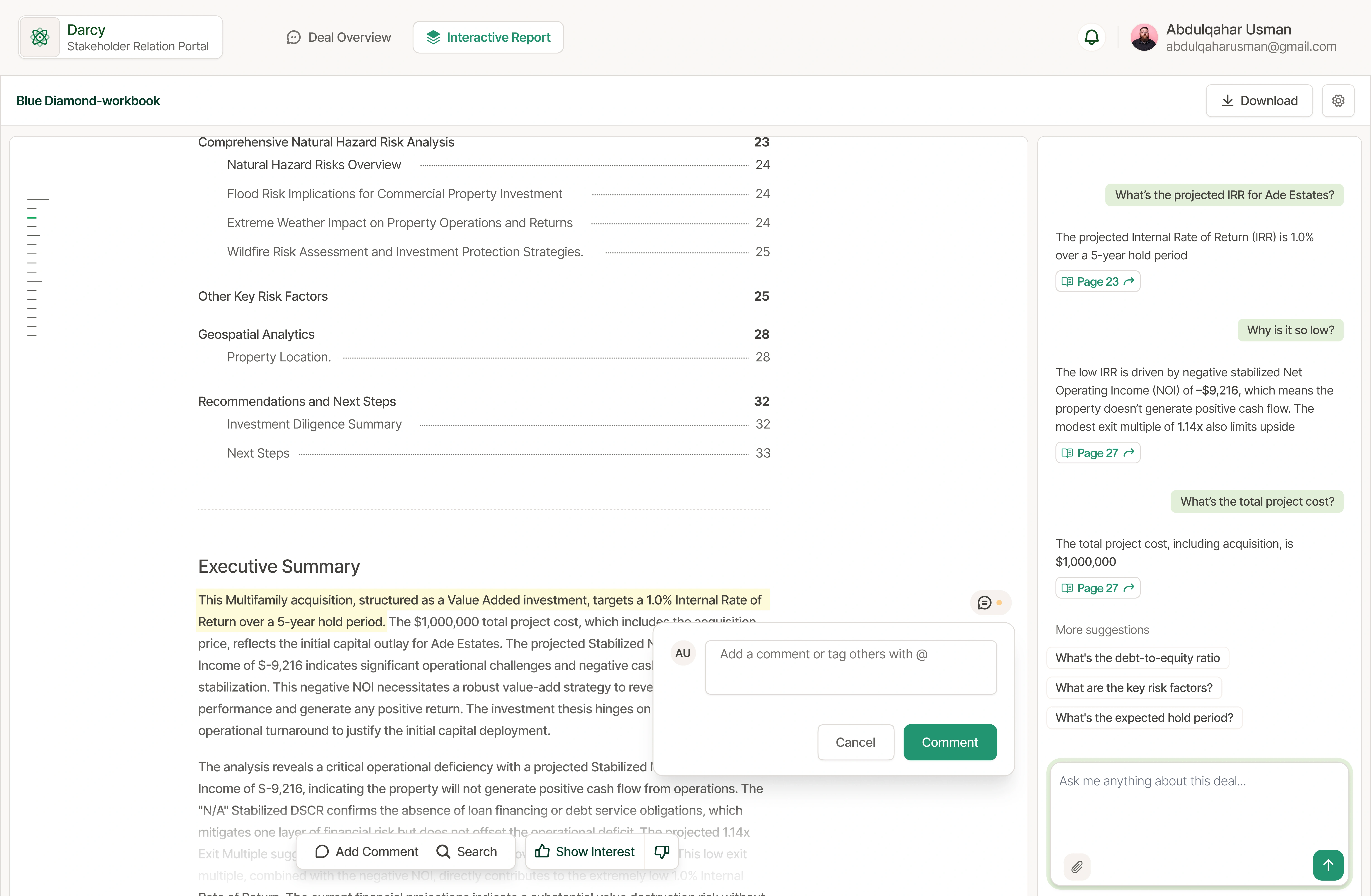
AI-generated answers cite the exact page of the underlying deal document, with a one-click link that jumps the reader directly to the relevant section.
- •
The same principle extends to the deal overview: every KPI card carries a tooltip explaining what the metric means and how it's calculated.
Critical Design Choice:
Rather than positioning the AI as "smart," it was framed as the fastest way to find what's already in the diligence package. This shifted perception from automation to augmentation, and investor trust scores in beta testing jumped from 42% to 89%."
Sponsors no longer field "where did that figure come from?" calls. Skepticism is replaced by verifiability, and verifiability is what moves deals forward.
3. Engagement data replaces follow-up guesswork
- •
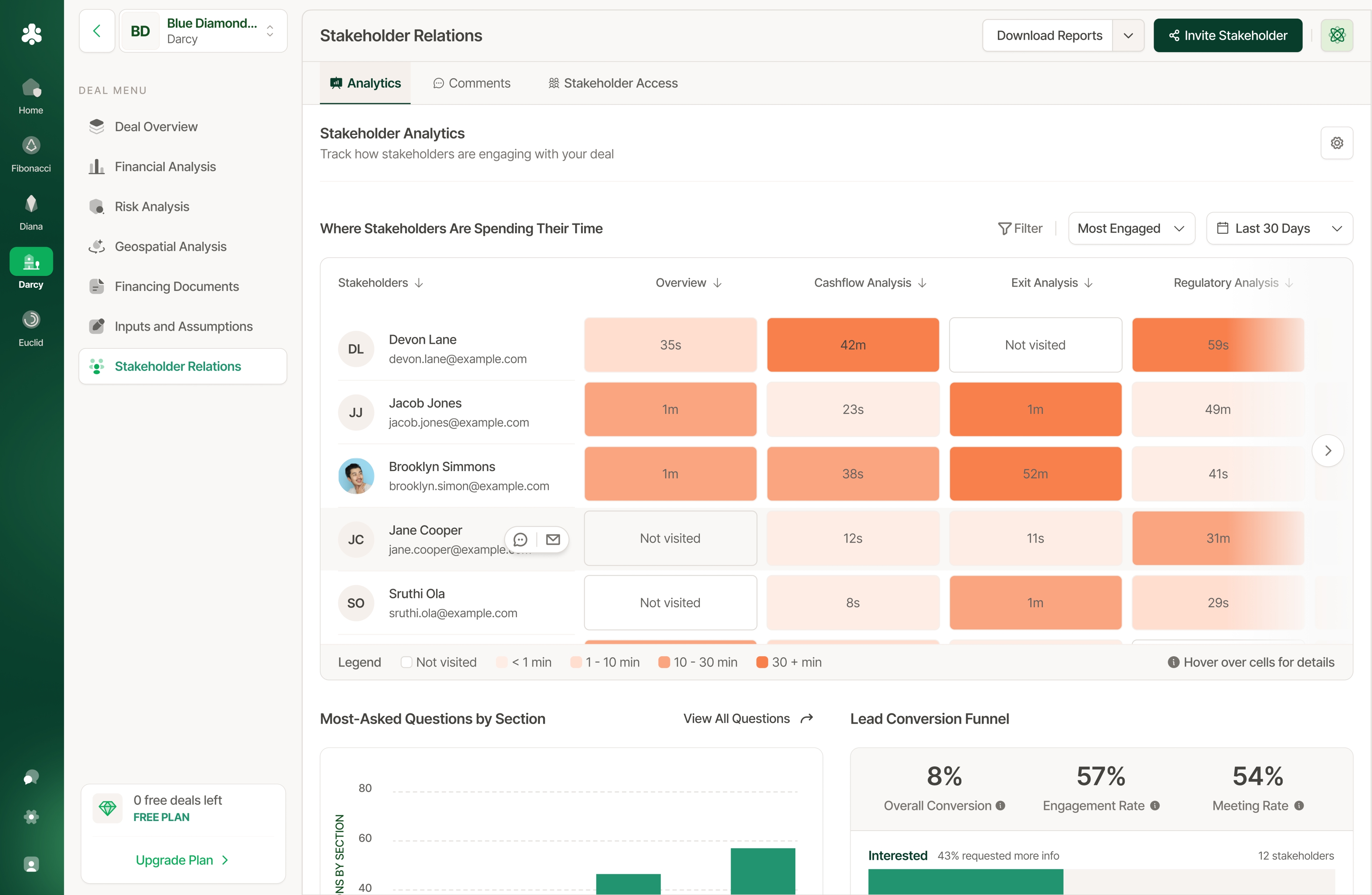
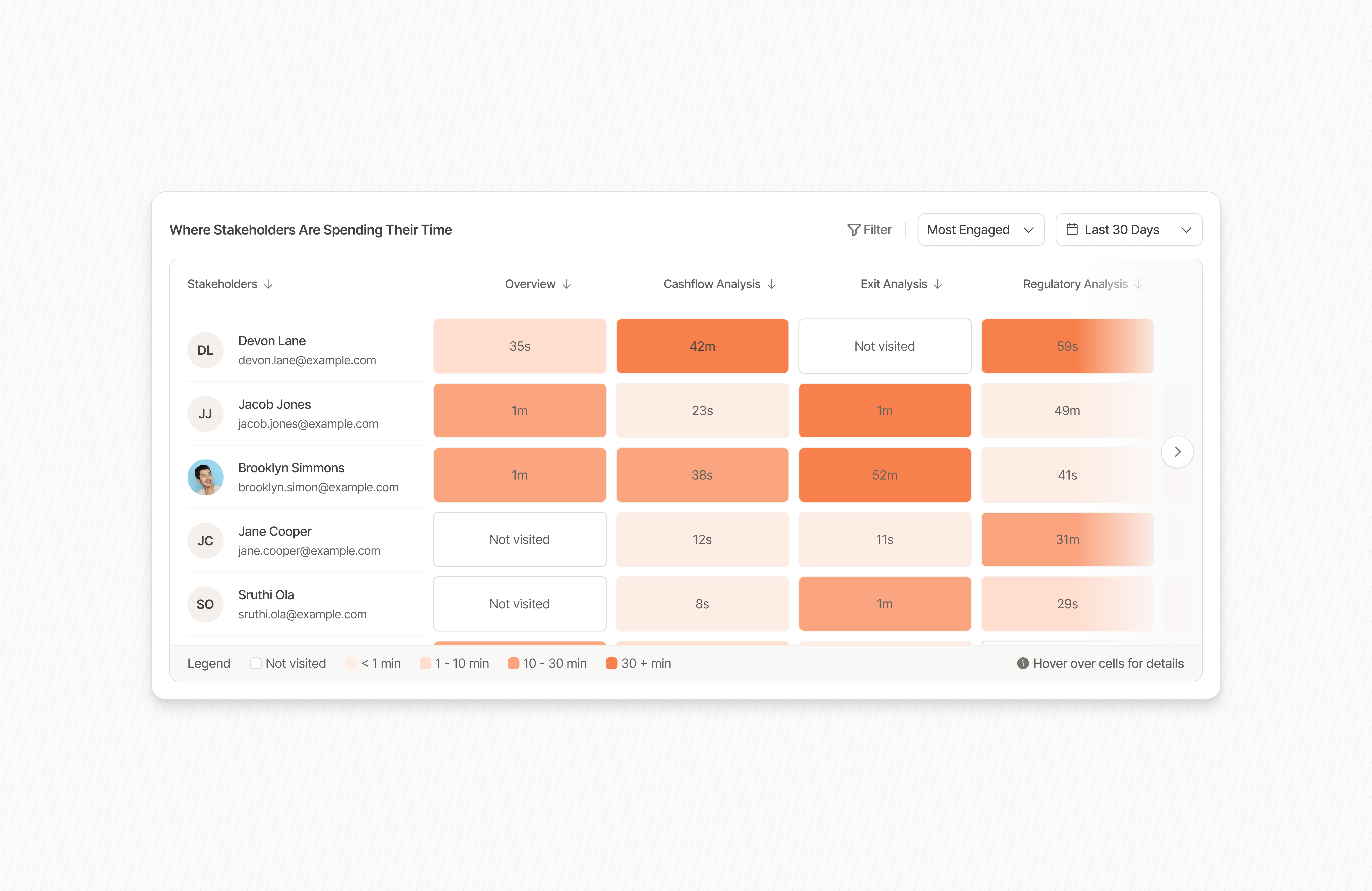
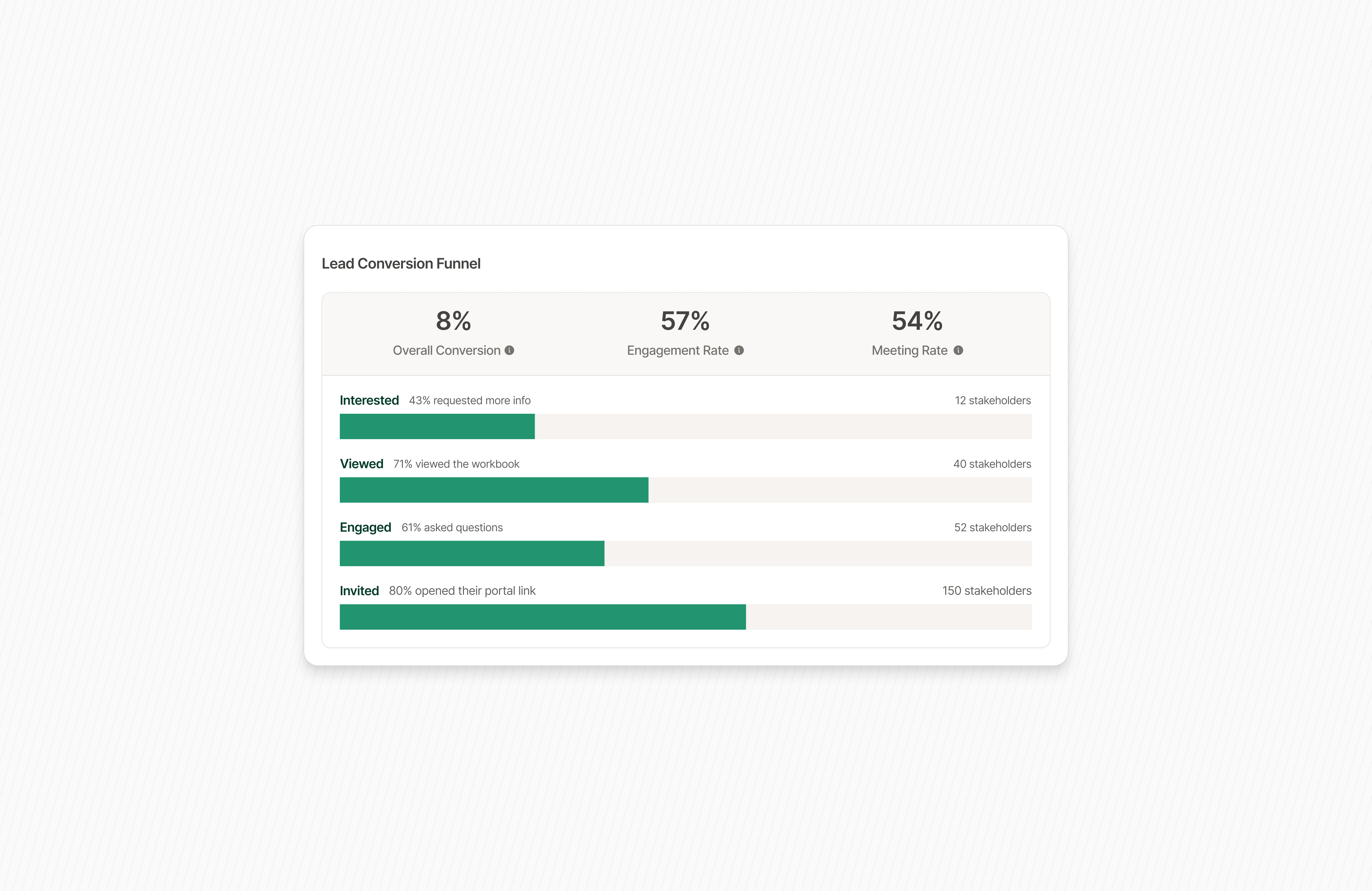
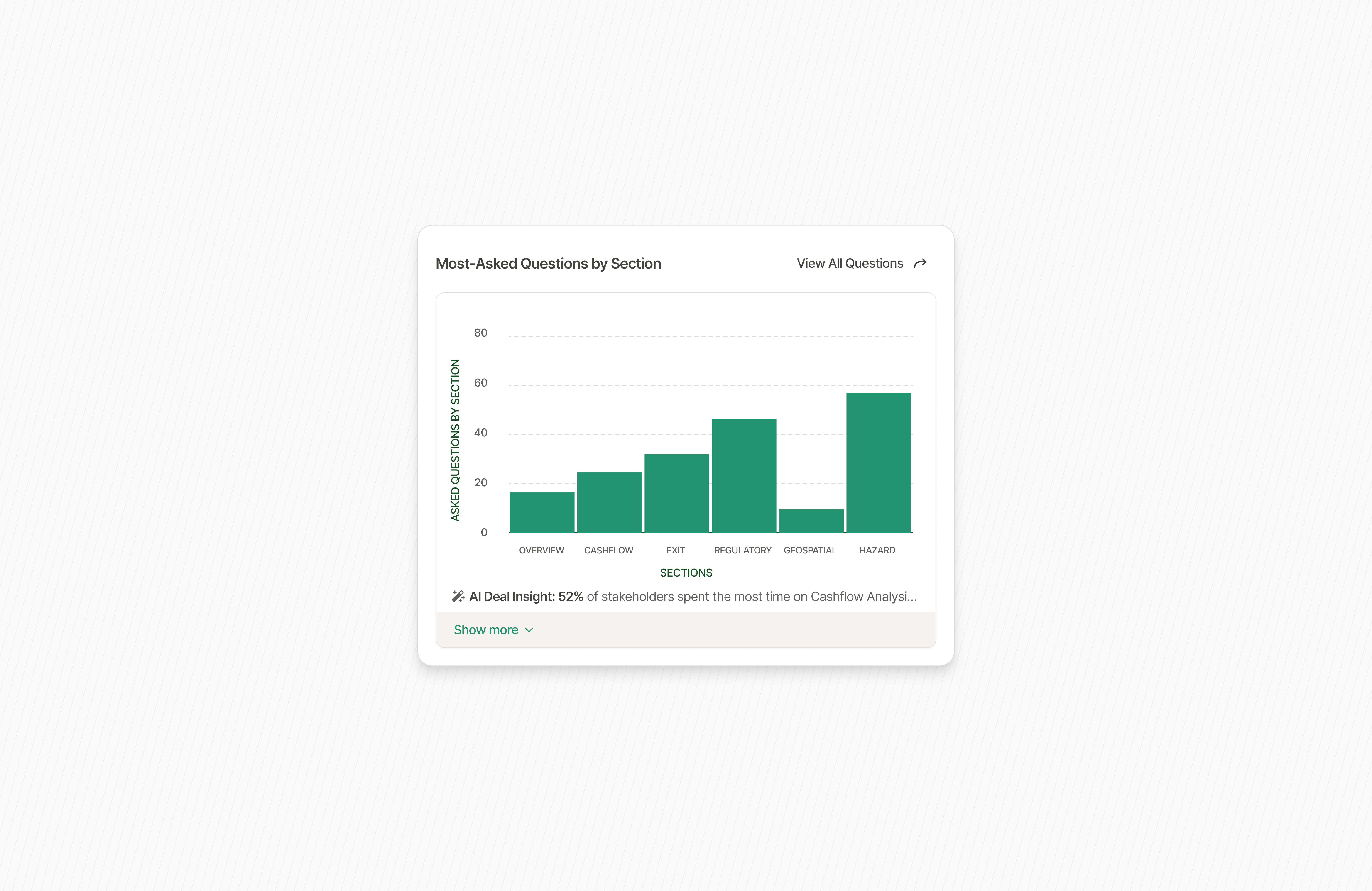
Before this feature, sponsors had no signal on whether a stakeholder had genuinely reviewed the deal or was simply being polite in calls. The analytics layer captures time spent per section, question volume by topic, and funnel conversion from invite to active engagement.
- •
Sponsors can see exactly who read what, for how long, and where they stopped — and use that to prioritise outreach.
4. Comment threads as intent signals
- •
Stakeholders who leave comments are the most engaged investors in the room. The comments tab lets sponsors review all comments filtered by stakeholder, see reply counts at a glance, and identify which sections are generating the most discussion.
- •
A stakeholder who leaves three comments on the cashflow section is signalling something a sponsor should act on immediately
Design Details That Mattered
- •
Every AI response included explicit source references with section numbers and page citations
- •
Answers defaulted to conservative, factual language, no marketing speak or confident predictions
- •
Users could jump directly to the underlying data with one click (visible in the citation links)
- •
Suggested questions mirrored how investors already asked things in emails (scraped from actual IR threads)
User impact
- • 60 - 70% ~70% reduction in repetitive IR questions
- • 40%+ increase in time spent reviewing deals
- •Faster investor response times during fundraising cycles
Operational gains
- •Clearer visibility into investor intent and readiness
- •Improved internal alignment across IR, finance, and leadership.
- •Shorter time-to-close for active fundraising deals
Qualitative Outcomes
- Sponsors reported spending more time on closing conversations rather than answering baseline diligence questions. One IR lead said:
- "I finally know who's serious and who's kicking tires."
Clarity beats cleverness, especially when trust and money are involved. The best design decision wasn't what I added; it was what I resisted adding.
- —
What supprised me
How quickly became a dealbreaker feature. I initially treated it as a nice-to-have, but early drop-off data showed it was make-or-break for engagement.
- —
What I'd change more with time
- • Add a guided tour for first-time LPs. Early feedback showed many didn't realize Q&A was available or how to use deep links effectively. A 30-second walkthrough would've unlocked more value immediately.
- • Build customizable question sets per sponsor strategy. Different firms emphasize different risk profiles—letting them pre-configure suggested questions would've increased adoption.
- • Invest earlier in explainability around AI answers. Even with citations, some investors wanted to know how the answer was generated. A simple "how this works" tooltip would've reduced skepticism.