Adsly
Adsly connects brands with creators to execute marketing campaigns.
Product Designer
- Solo Designer
- 2 Engineers
- 1 Product Manager
Oct 2025 – Jan 2026
- Led end-to-end product design for the campaign management platform covering brief creation, content submission, approval workflows, and payment
- Identified the core design tension (brand control vs. creator certainty) and used it to drive all key workflow decisions
- Designed the asymmetric UX model role-specific views for brands and creators built on shared campaign state, rather than a single compromised dashboard
- Made the critical decision to require feedback on all declines, reducing arbitrary rejections and improving creator trust
- Designed the three-state approval flow (Submitted → Accepted/Declined) that eliminated revision loops and ambiguity
- Defined the budget escrow and instant payment model that became the #1 trust signal in testing
- Introduced asymmetric friction patterns (one-click accept, typed decline) to bias the system toward fair outcomes
- Conducted prototype testing with 25+ creators and 10+ brands, and iterated based on beta feedback from 39 users
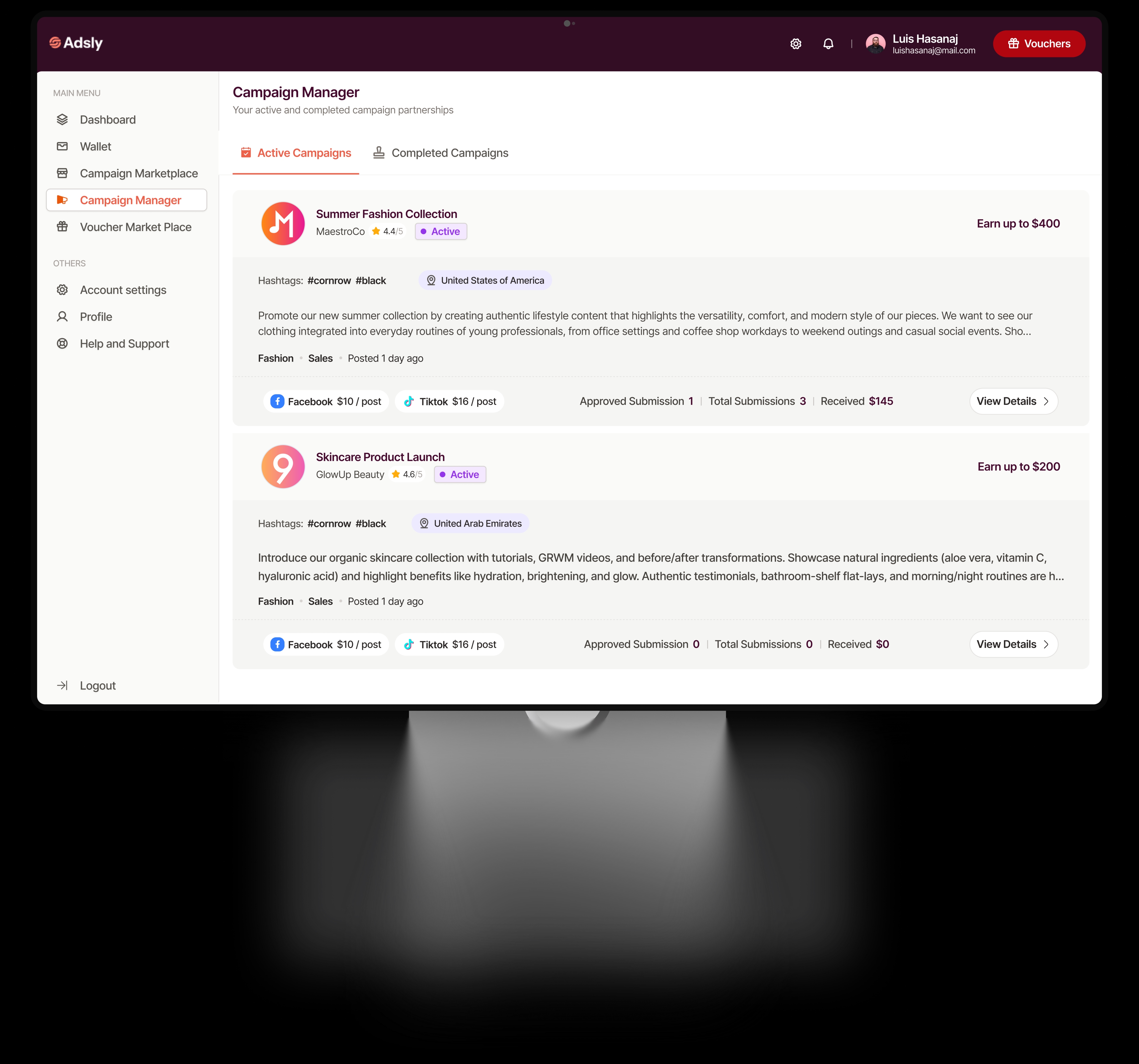
Most influencer platforms solve discovery, helping brands find the right creators in minutes. But the real friction begins after the match is made: Campaigns stall because neither side knows who should act next, content gets approved then reversed, payments are disputed because there's no shared record of what was agreed to. I designed Adsly's campaign management platform from the ground up, structuring workflows around a core tension (brands need control, creators need certainty) to make expectations visible, progress undeniable, and "done" something both sides actually agree on. In prototype testing with 25+ creators and 10+ brands, "what happens next?" confusion dropped by 60%, and the instant payment model became the #1 trust signal for creators. Adsly is set to launch Q2 2026.
Influencer Platforms Solve Discovery. Adsly Needed To Solve Trust.
Most influencer platforms solve discovery brilliantly, helping brands find the right creators in minutes. But Adsly saw an opportunity others missed: the real friction begins after the match is made. When brands and creators operate from different interpretations of the brief, when progress lives in scattered email threads and conflicting spreadsheets, when one side says "done" and the other says "this isn't what we agreed to", trust erodes fast. For Adsly's new campaign management platform, we couldn't treat post-match workflow as an implementation detail.
We had to design from the ground up: workflows that make expectations visible from day one, progress undeniable to both sides, and "done" something everyone actually agrees on before miscommunication becomes conflict.
The Core Challenge:
Brands Need Control
They want to protect their reputation and budget.
Creators Need Certainty
They will be publishing content with no guarantee of payment.
What Was Breaking?
- •
Campaigns would stall because neither side knew who was supposed to act next
- •
Brands would approve content, then change their minds, leaving creators unsure if they'd completed the work
- •
Creators would submit content with no confirmation it was received or being reviewed
- •
Payment disputes happened constantly because there was no shared record of what was agreed to
These aren't reconcilable through better messaging or customer support. You can't "communicate your way out" of structurally ambiguous workflows.
Two Users, Two Interfaces, One Truth
Instead of building a single compromised dashboard, we created role-specific views on top of shared campaign state.
A brand looking at a campaign asks:
A brand looking at a campaign asks:
Is this on track?
Is the content on-brand?
Am I going over budget?
Can I stop this if needed?
A creator asks:
A creator asks:
What exactly do I need to deliver?
When is this due?
Have I done enough?
When do I get paid?
Forcing these into one interface means either overwhelming creators with information they don't need, or hiding information brands require to feel in control.
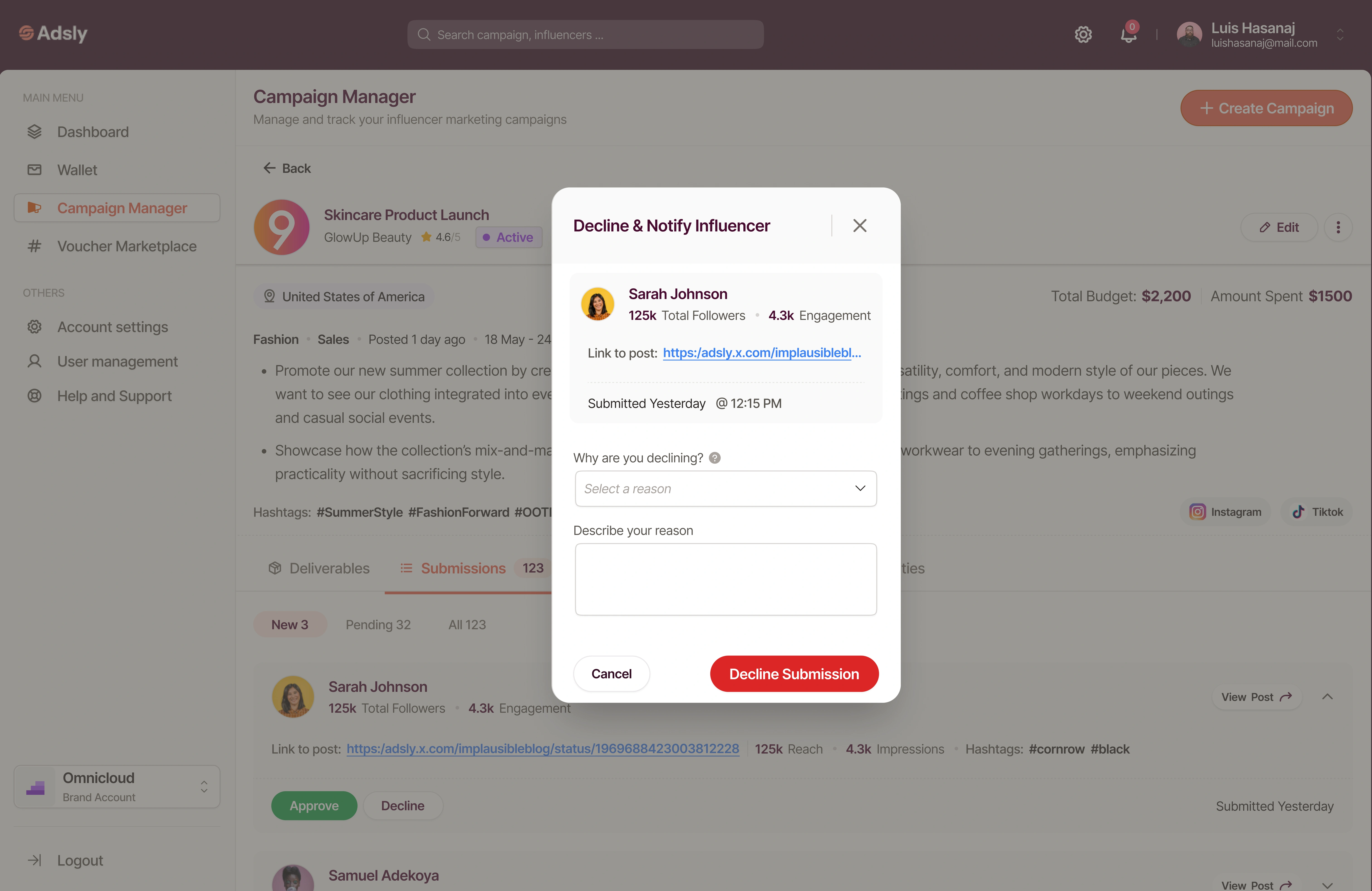
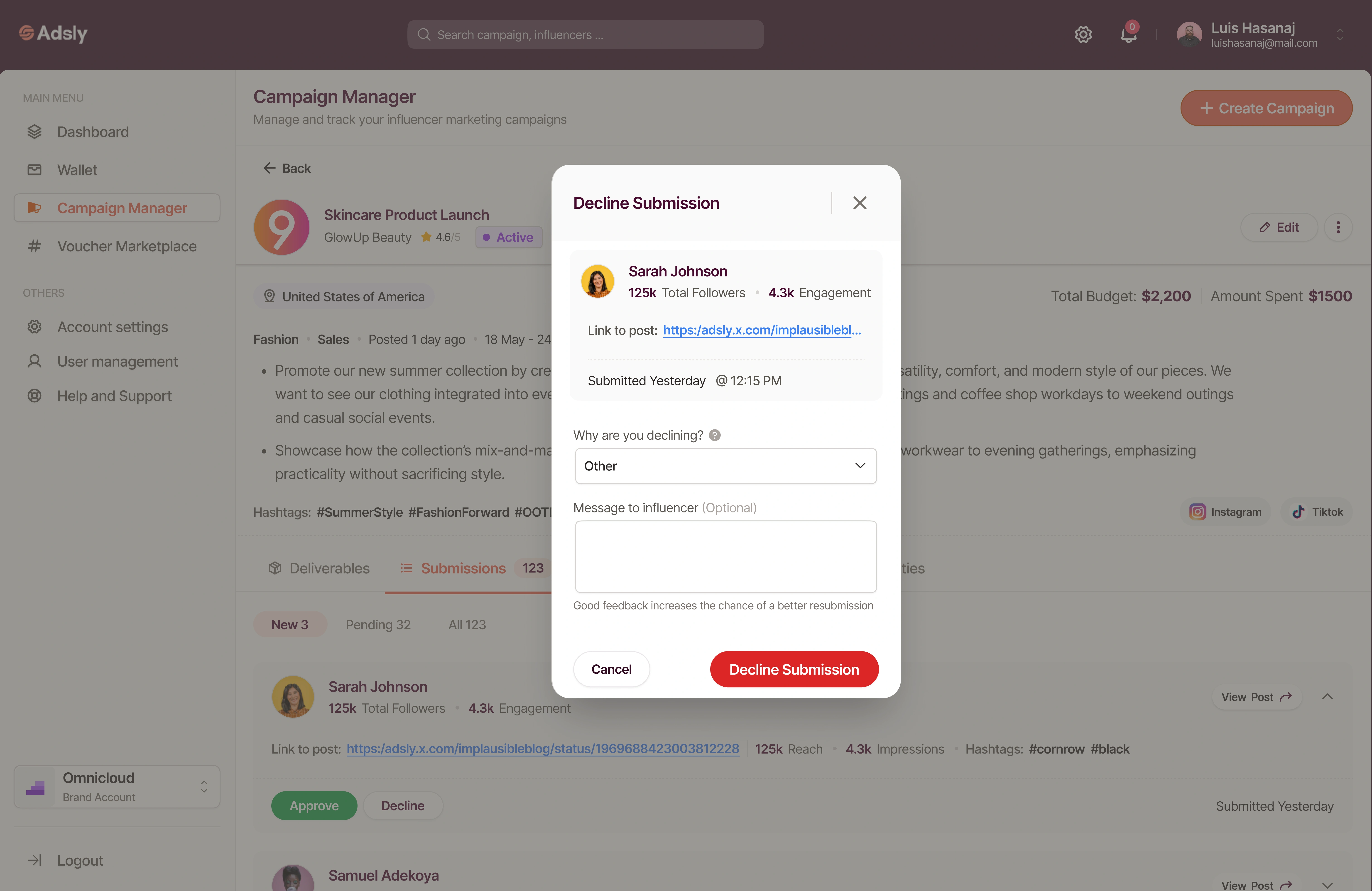
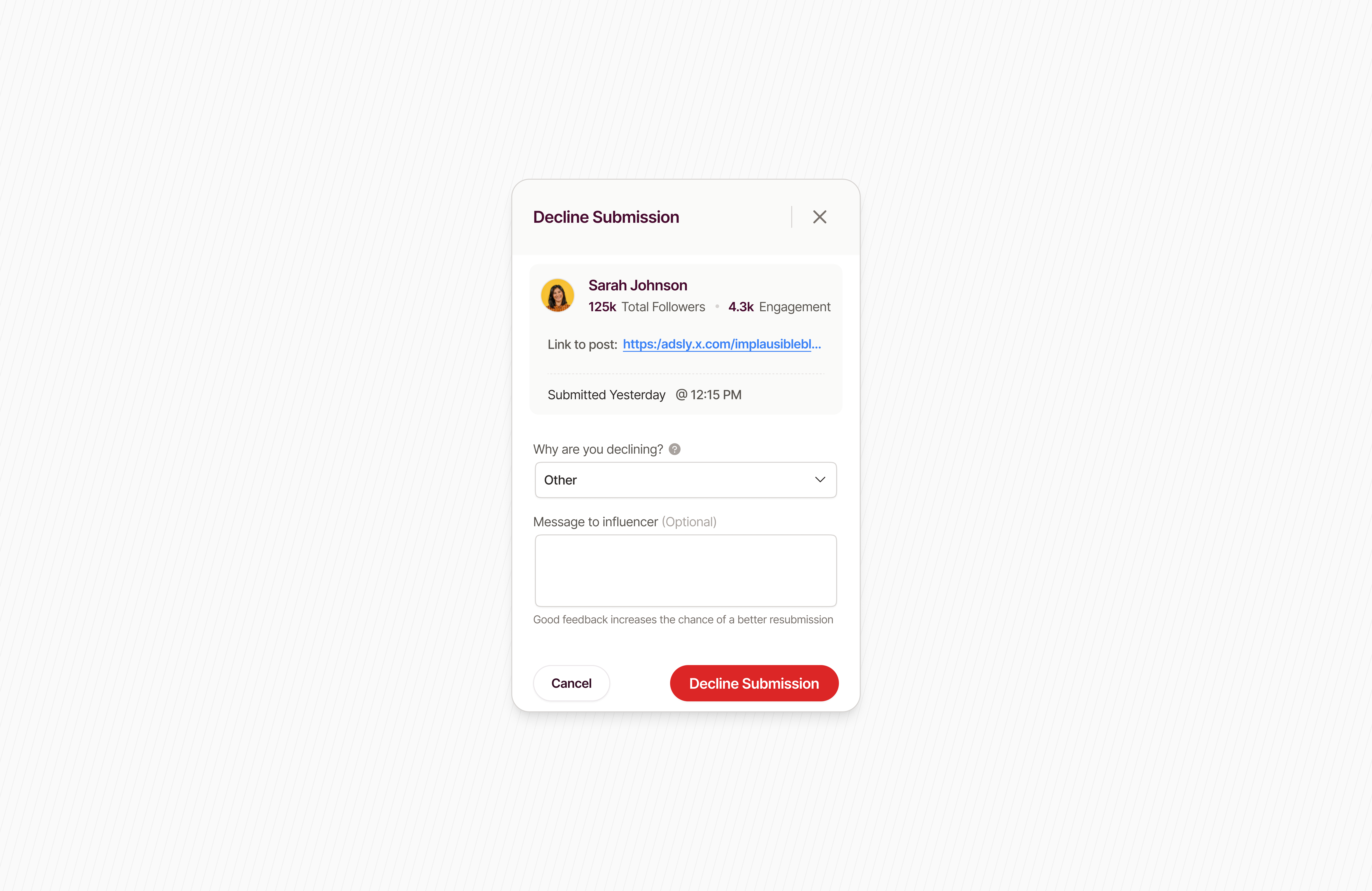
1. Required feedback on declines
- •
The problem: Early on, brands could decline submissions with one click and no explanation. Creators had no idea what went wrong.
- •
The decision: Made feedback required for all declines. Brands must articulate why before the action completes.
- •
The result: Decline rates dropped. Brands thought twice when they had to explain their reasoning. Creators who were declined knew exactly what to fix for future campaigns.
[ solution-1 ]
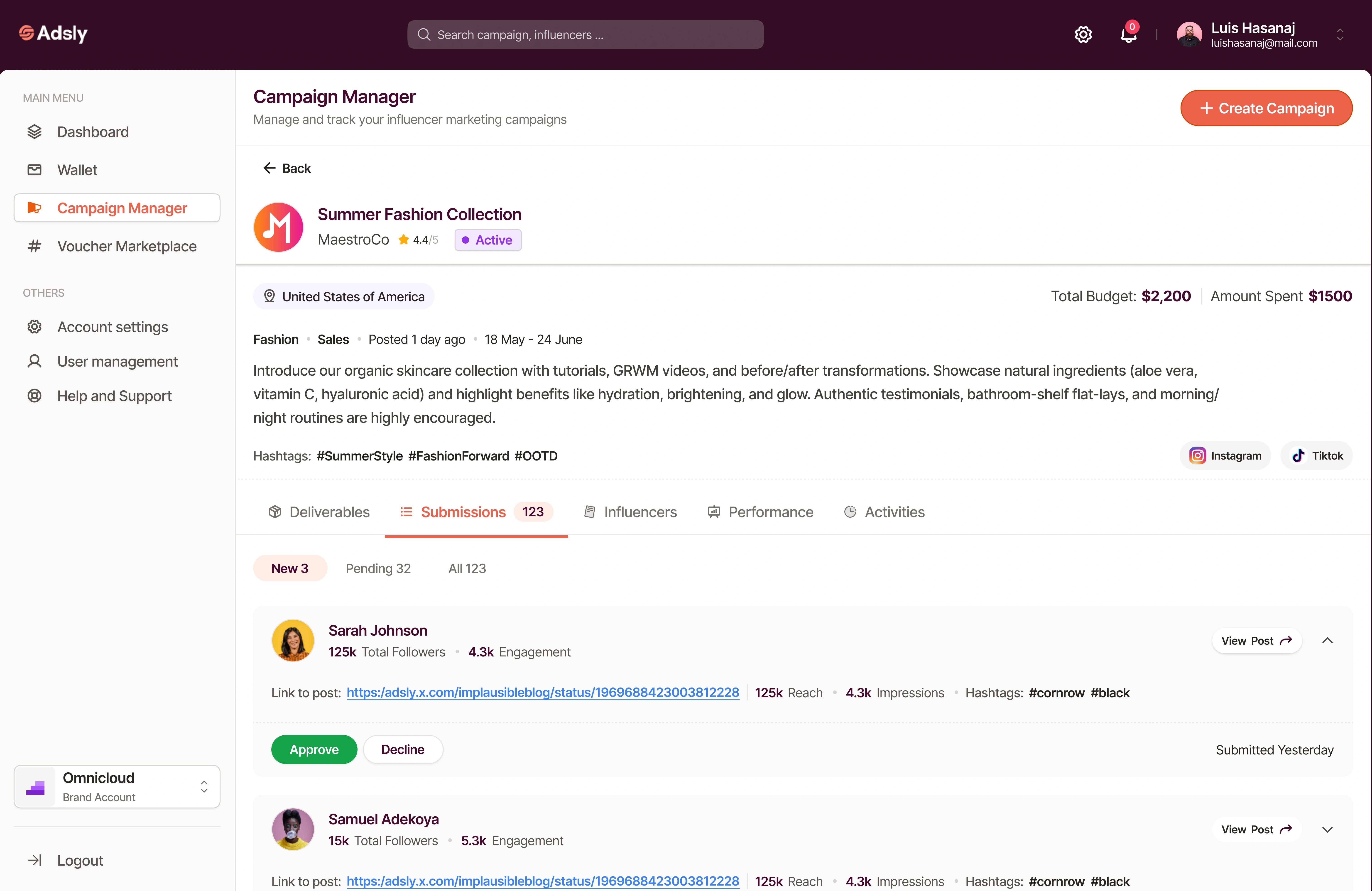
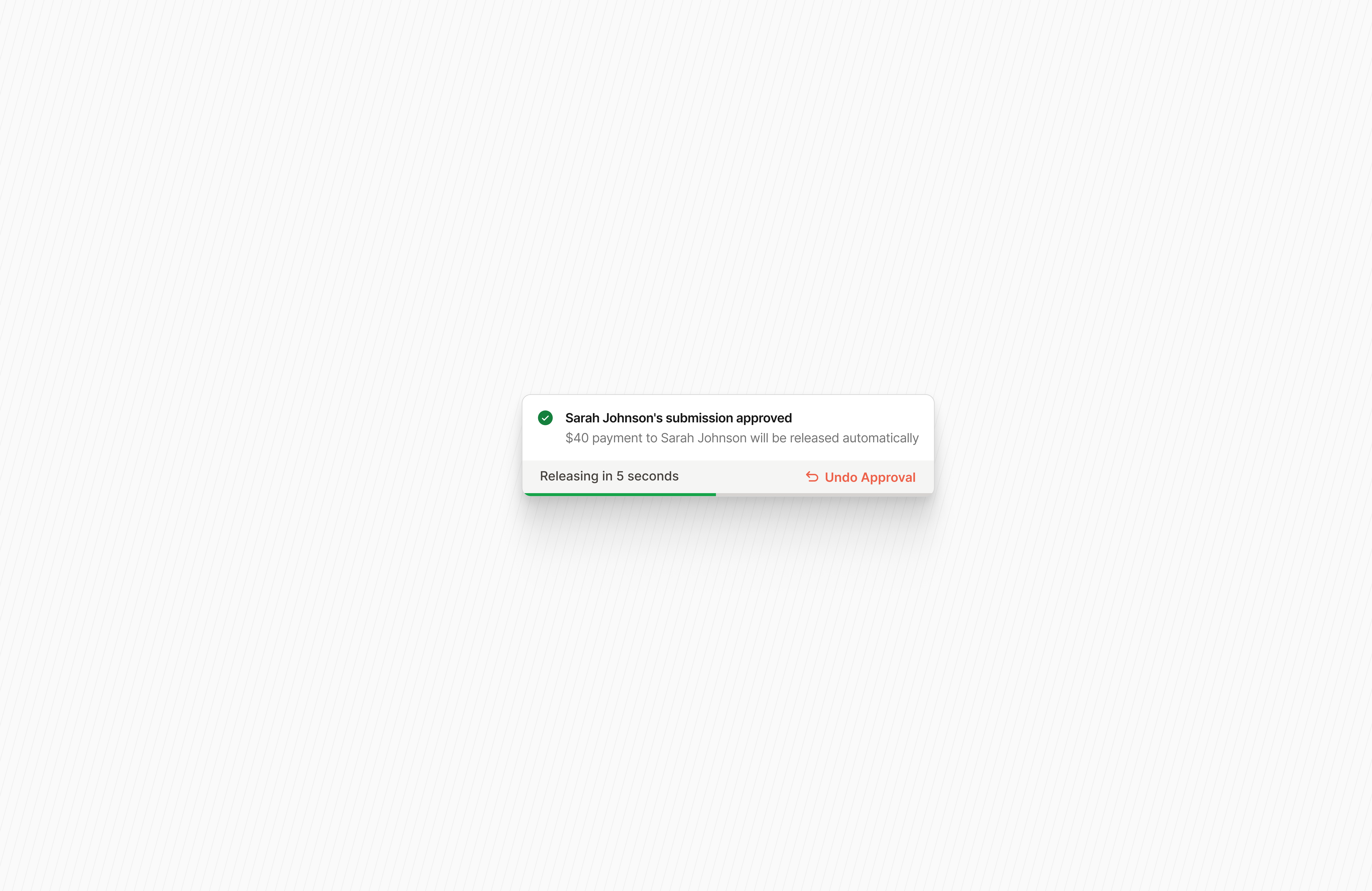
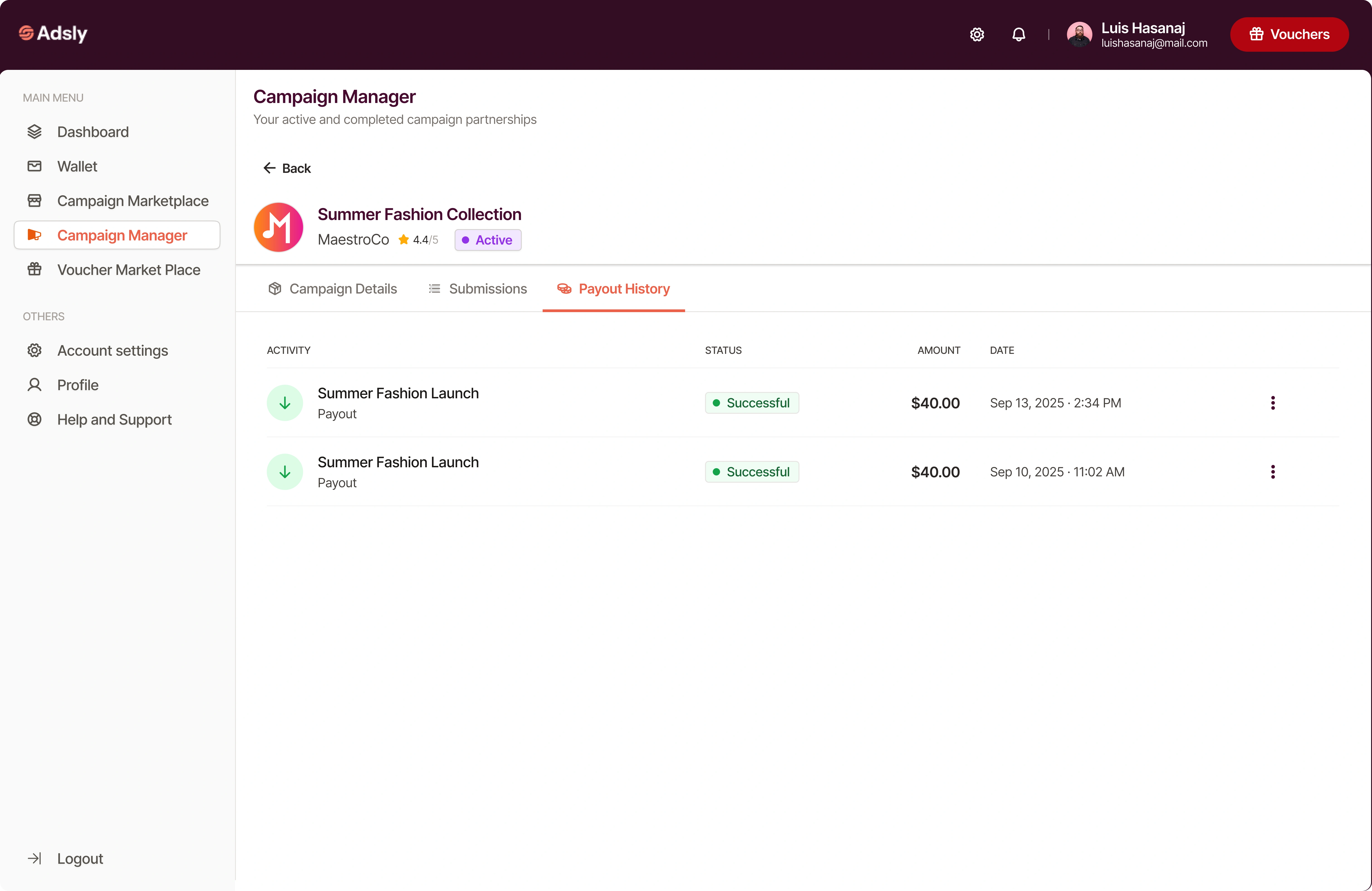
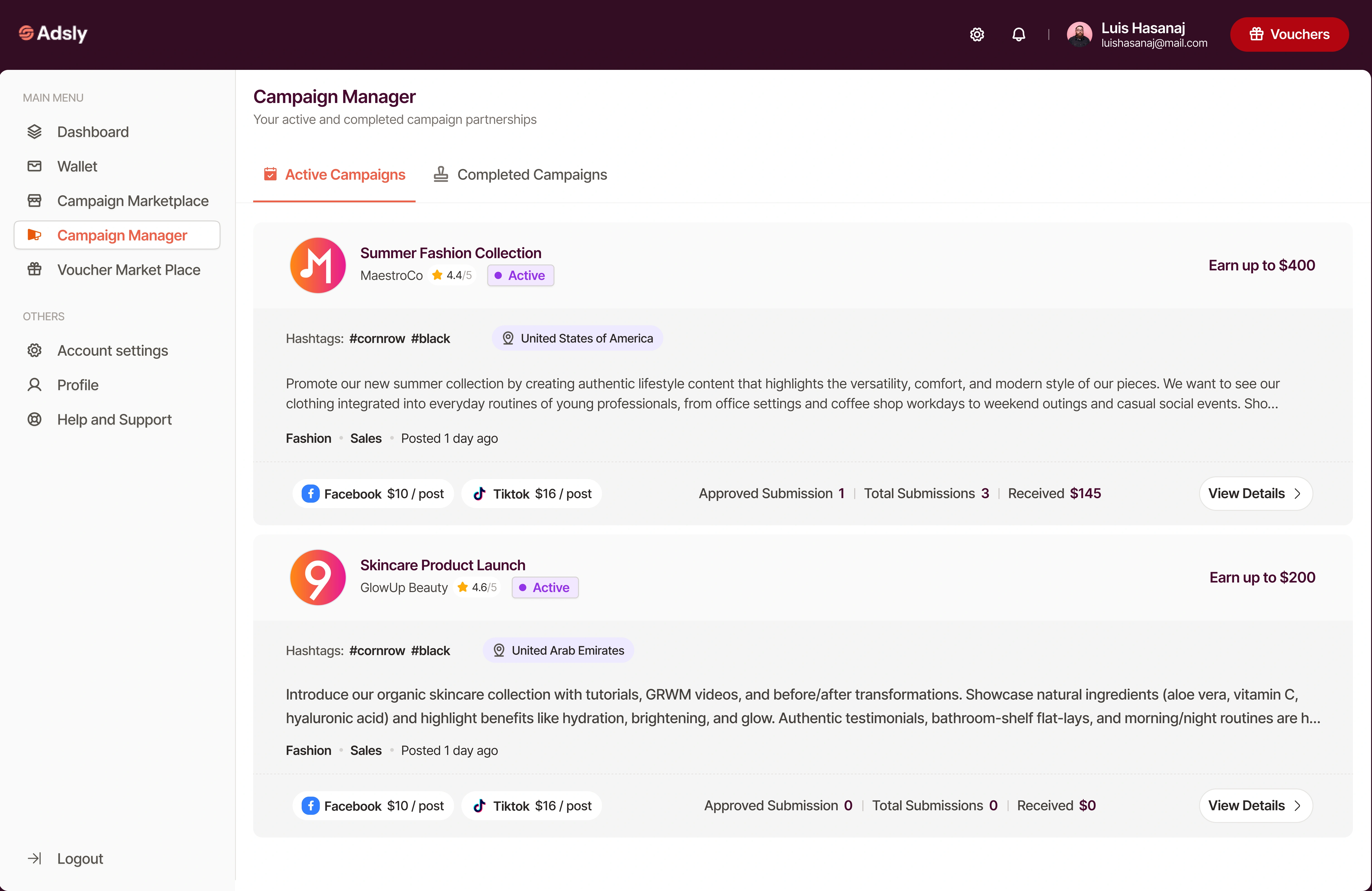
2. Instant payment on acceptance
- •
The problem:Traditional platforms process payments in 3–5 business days. This introduces uncertainty, did the payment actually trigger? When will it arrive?
- •
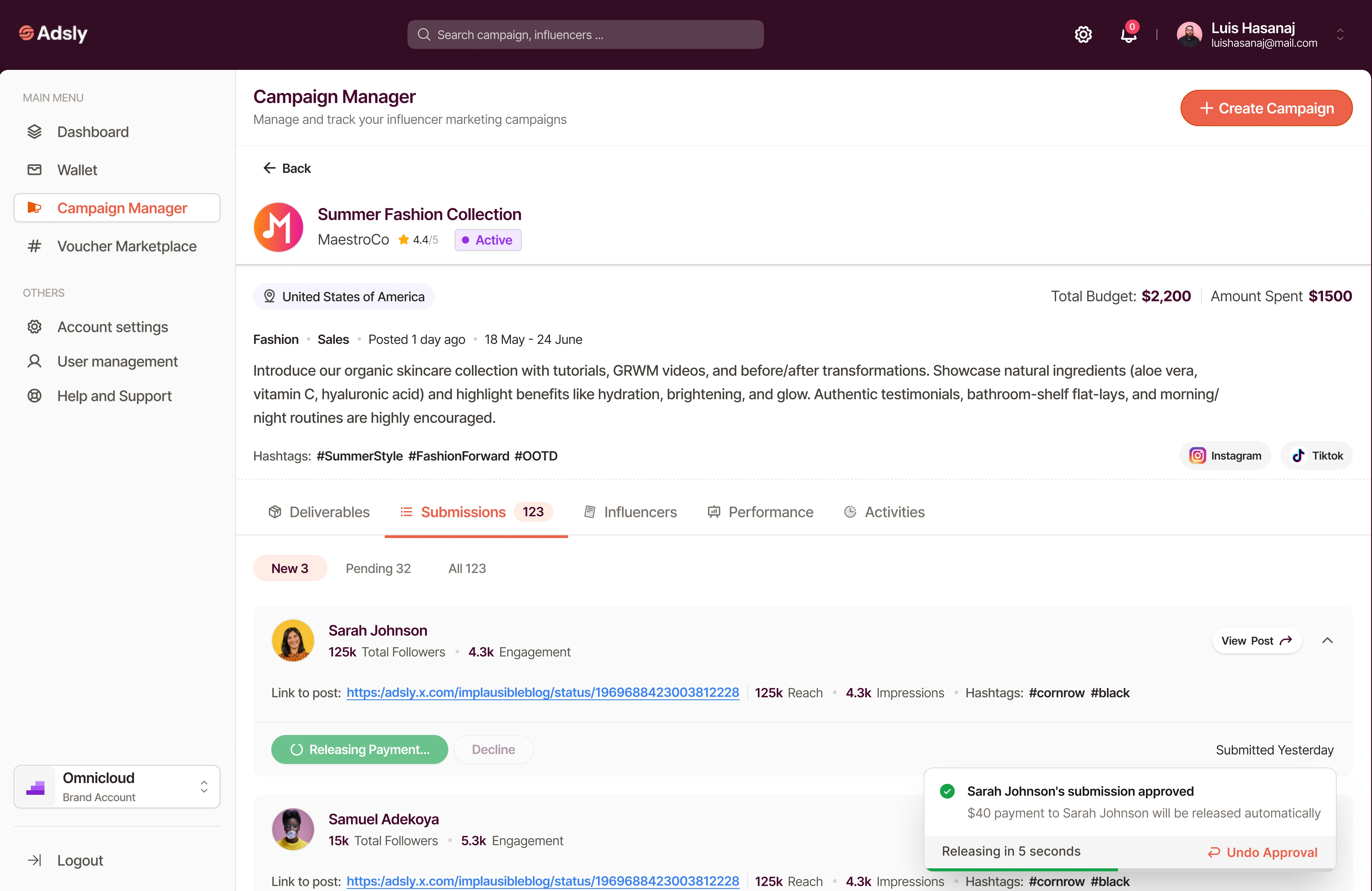
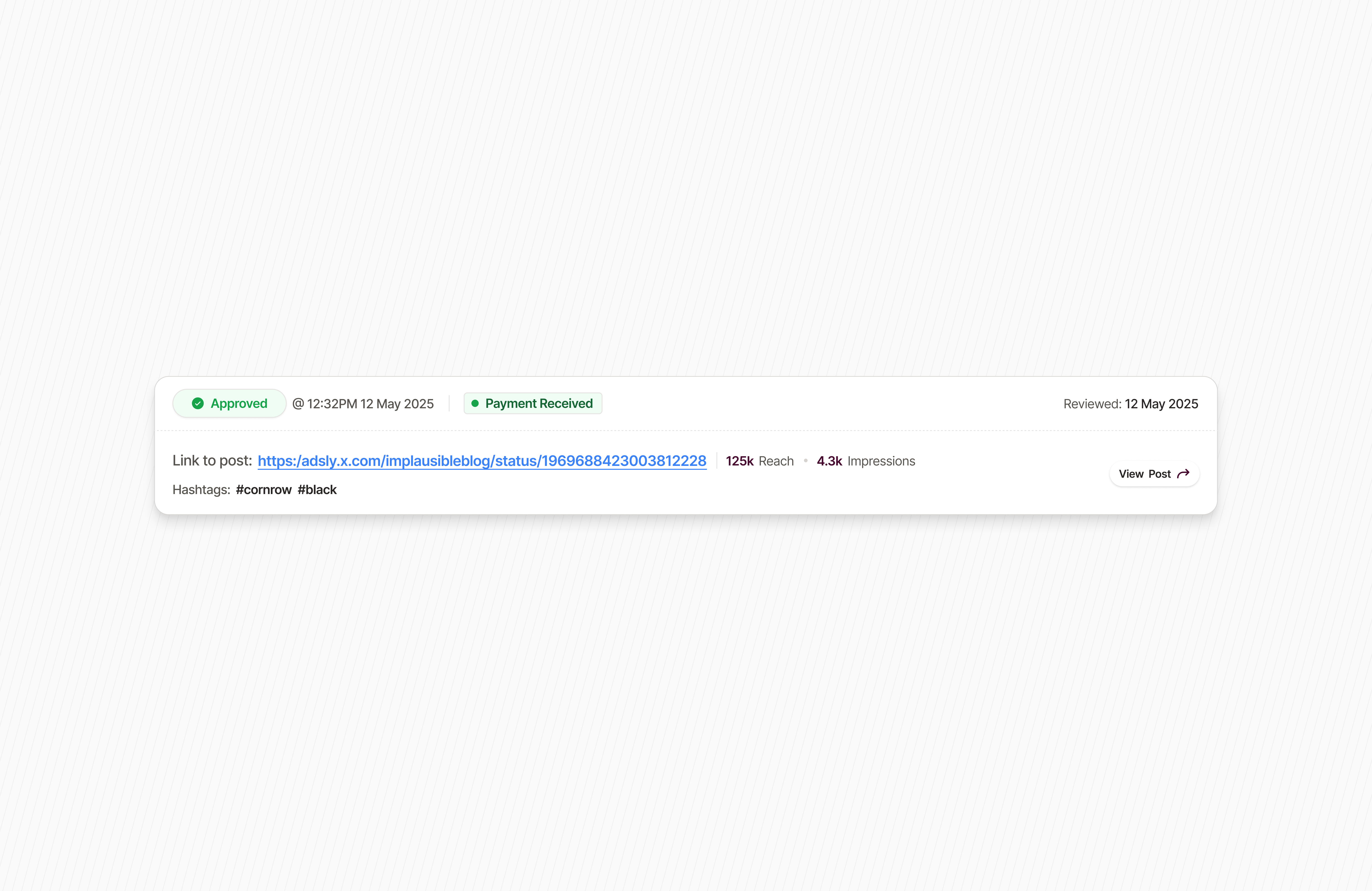
The decision: Payment releases to creator's wallet the moment a brand accepts a submission. No processing delays
- •
The result: Where's my payment?" support questions disappeared. Creators trusted the platform because acceptance meant immediate money.
[ solution-2 ]
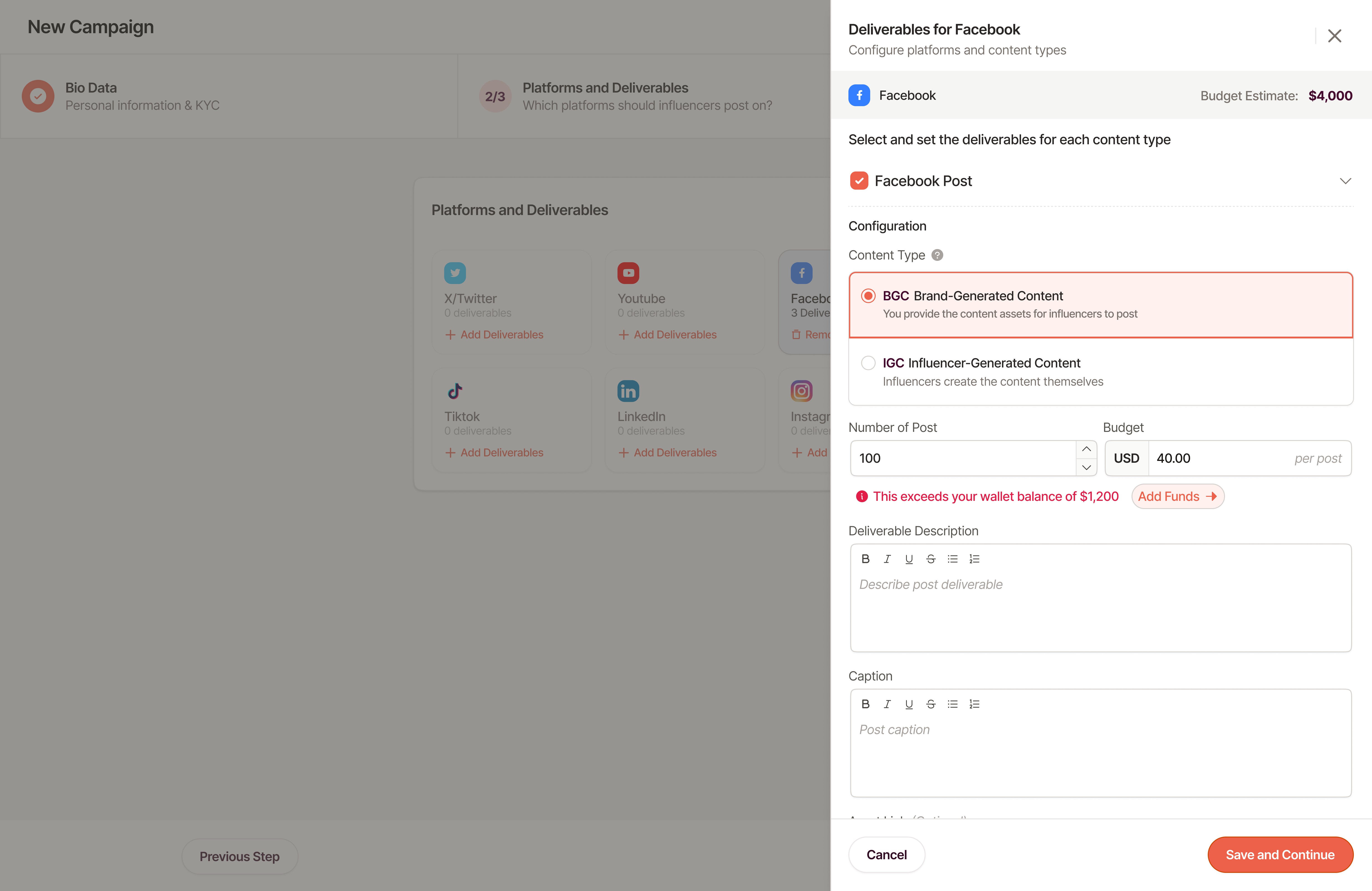
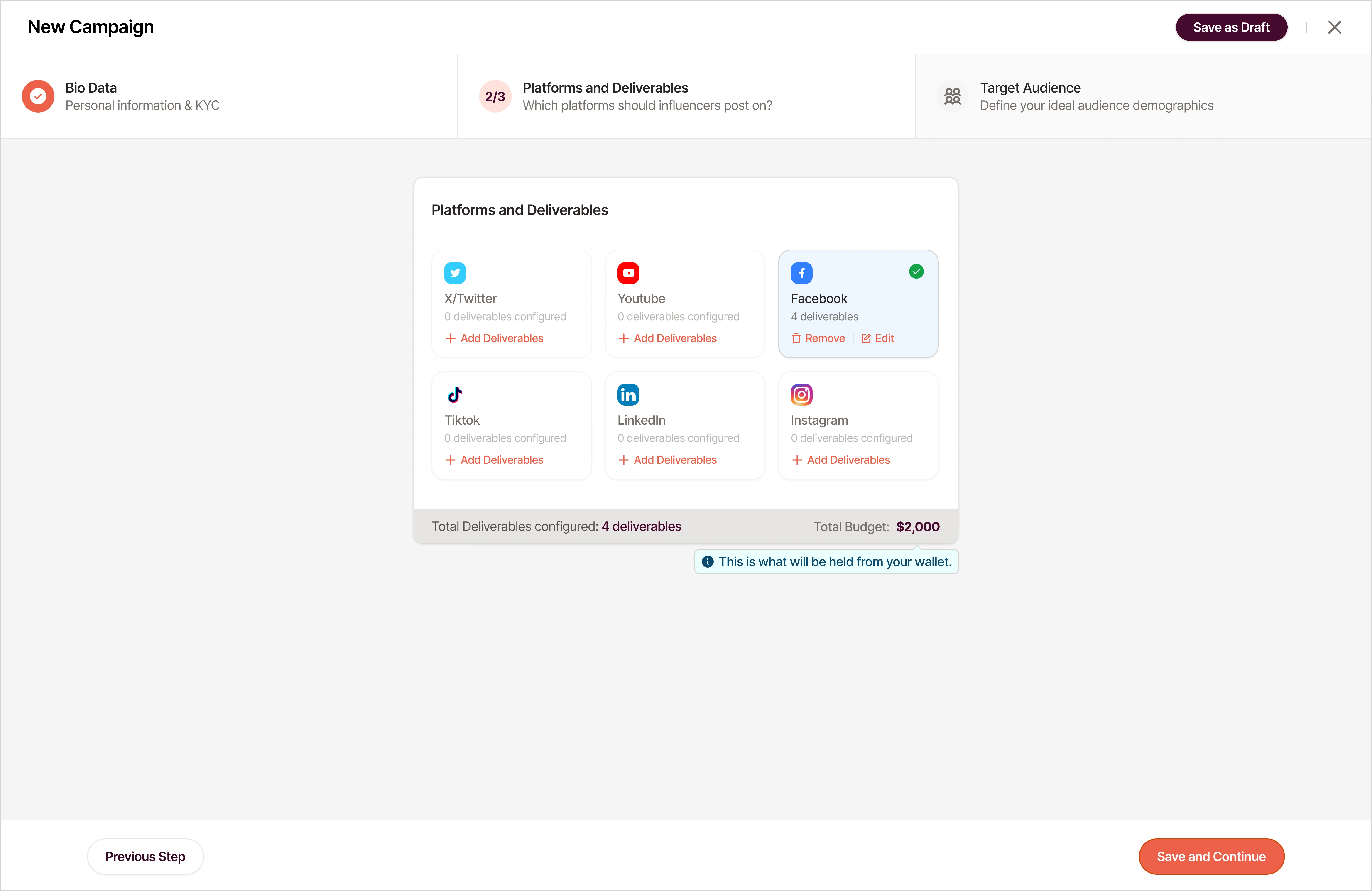
3. Budget escrow at campaign creation
- •
The problem:Creators knew money existed before submitting. Brands couldn&'t post unfunded campaigns. Payment disputes dropped to near zero.
- •
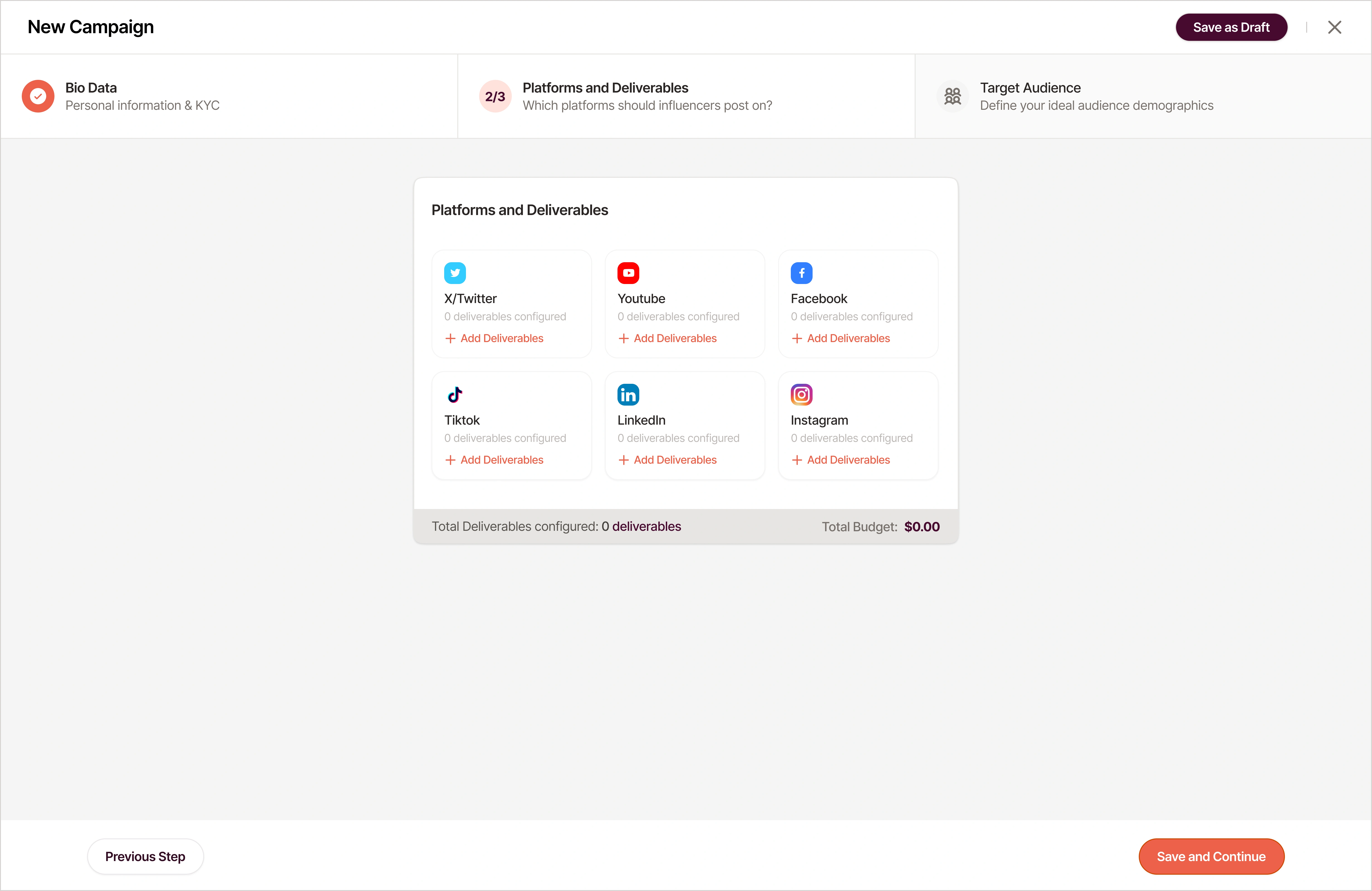
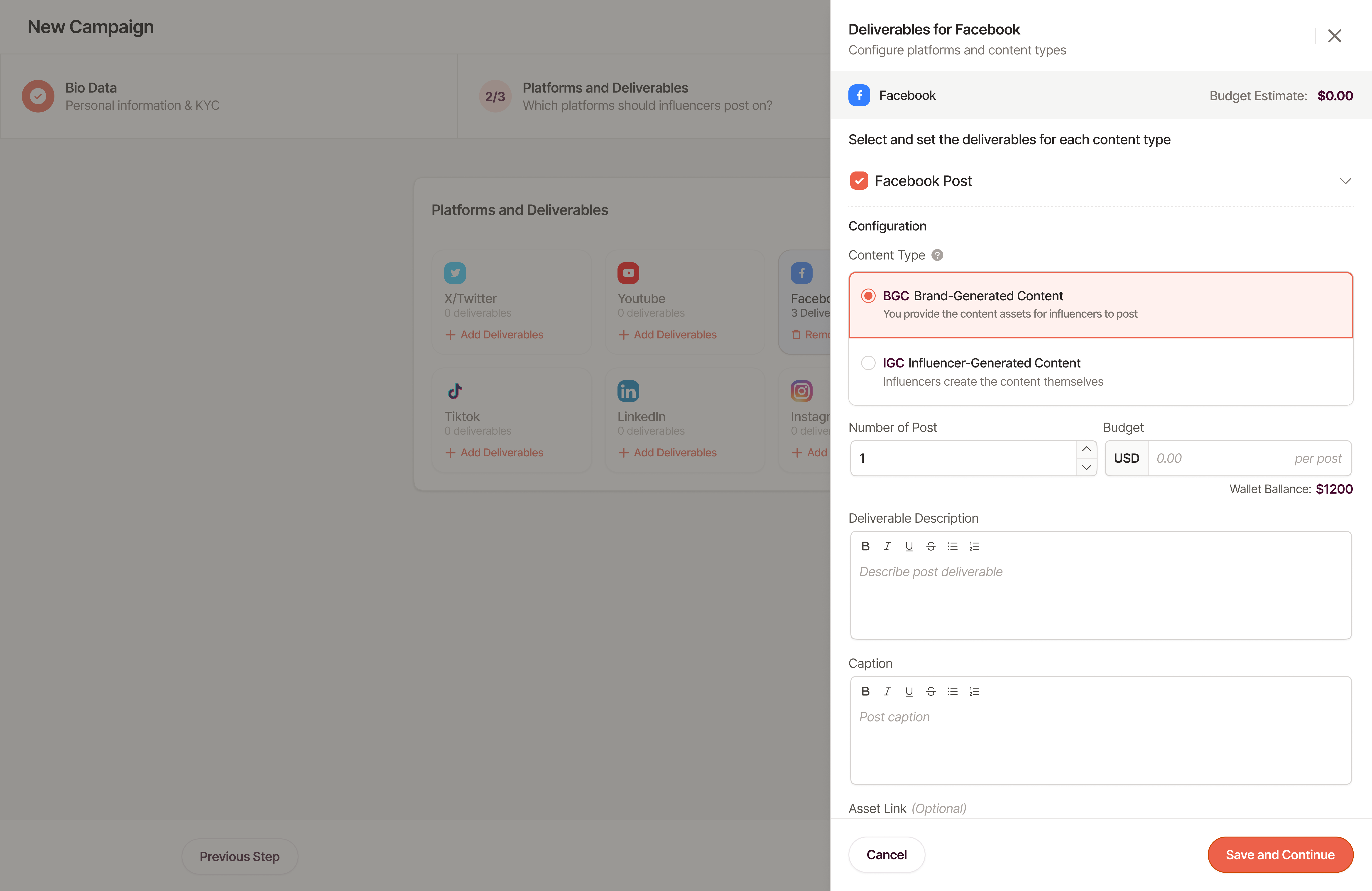
The decision: When brands create campaigns, they set payment per submission. Total budget is calculated and escrowed from their wallet immediately.
- •
The result: Creators knew money existed before submitting. Brands couldn't post unfunded campaigns. Payment disputes dropped to near zero.
[ solution-3 ]
4. Three states no loops
- •
The problem:Complex approval workflows with drafts, revisions, and resubmissions created confusion about what "approved" actually meant.
- •
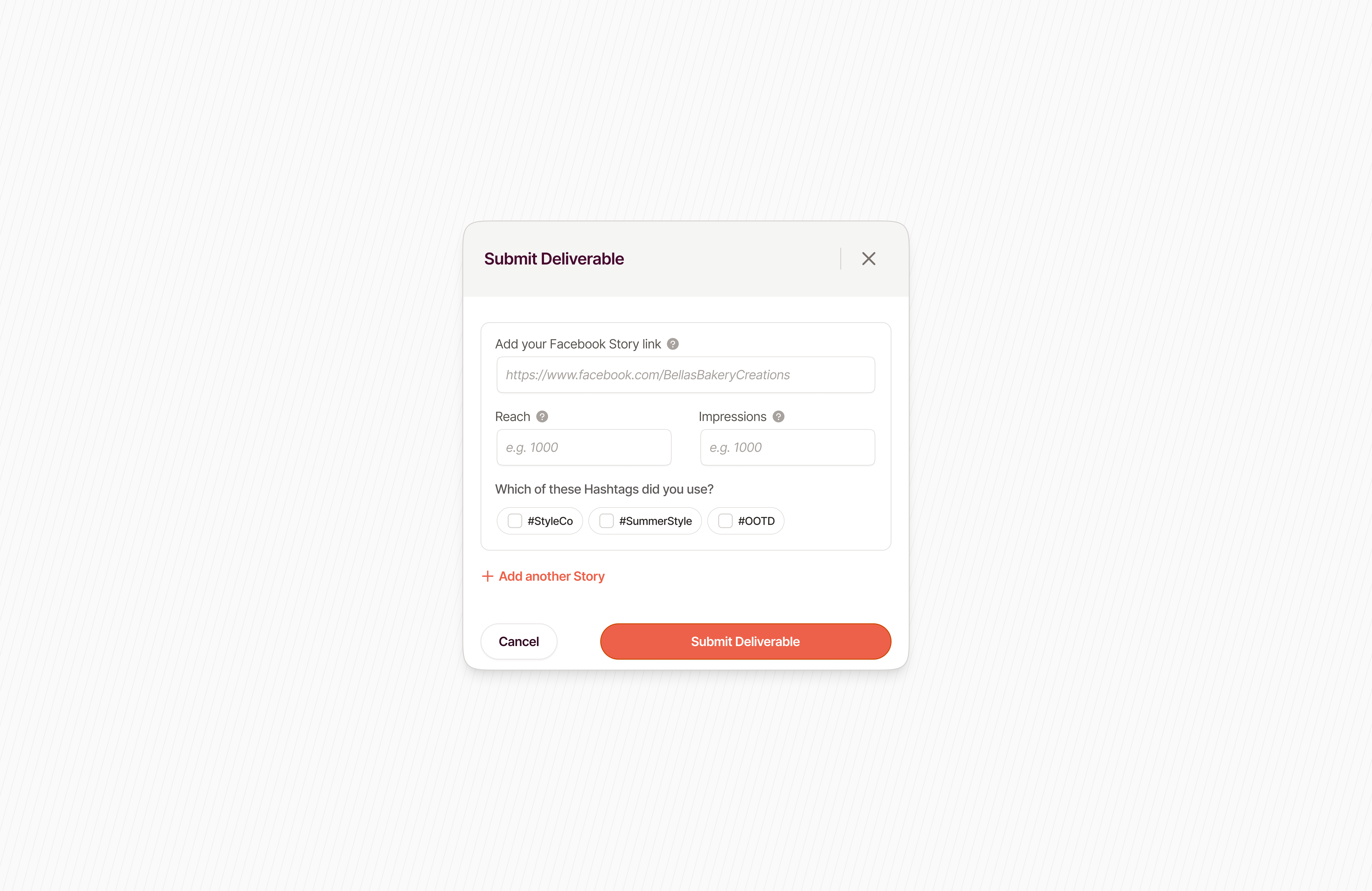
The decision: Creators publish content first, then submit the post link. Brands either accept (instant payment, campaign closes) or decline (required feedback). No revisions, no resubmissions.
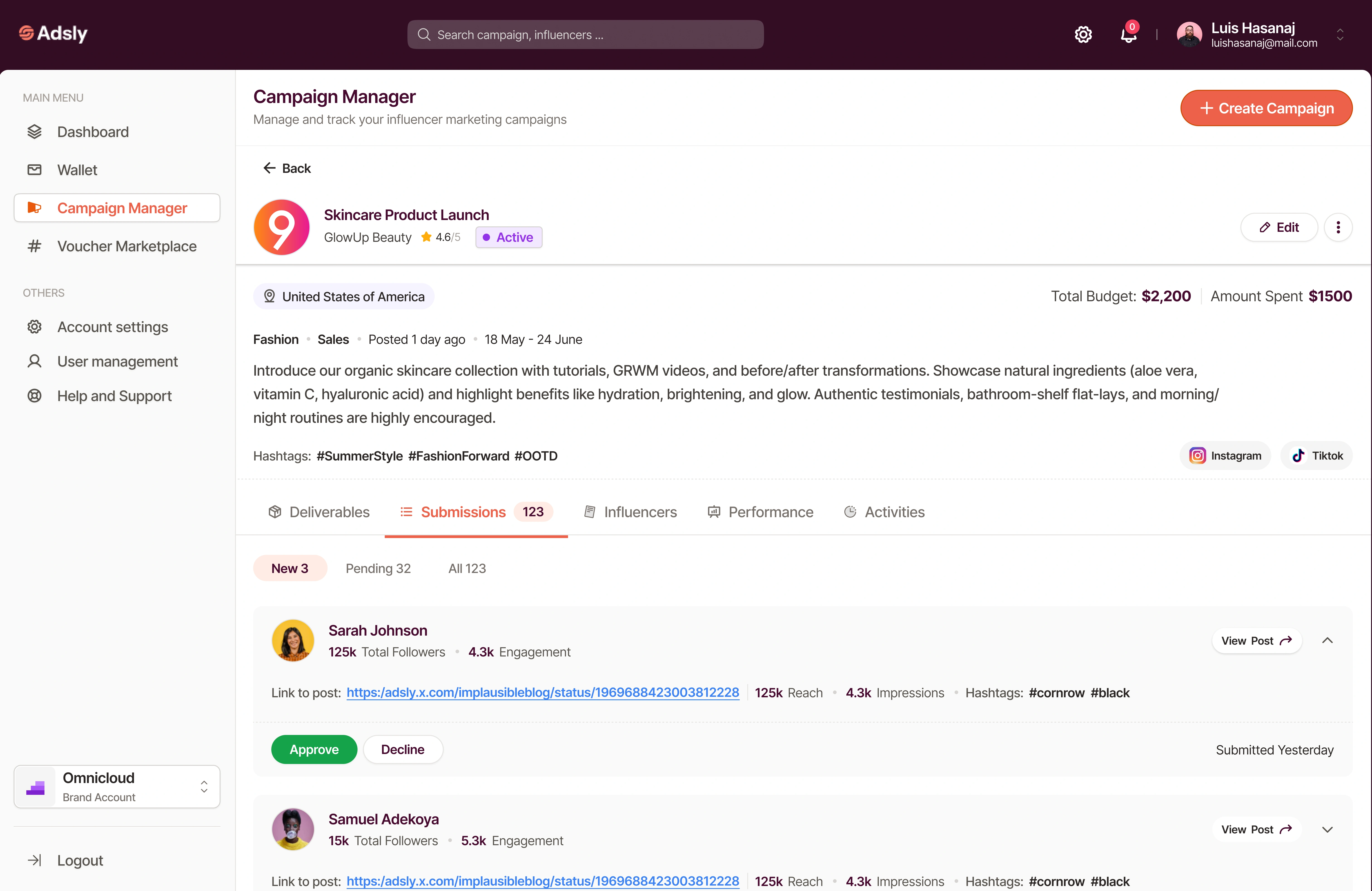
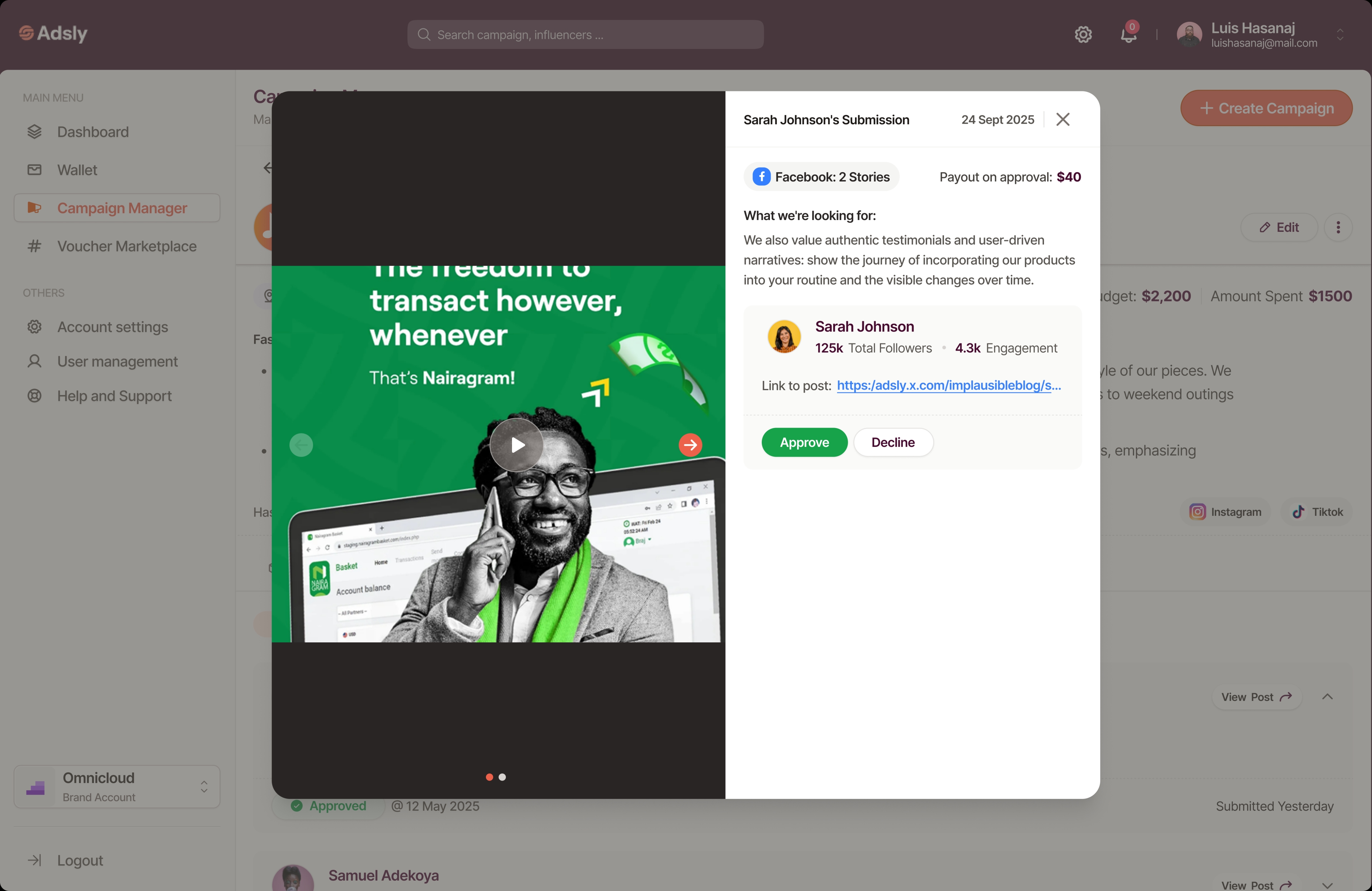
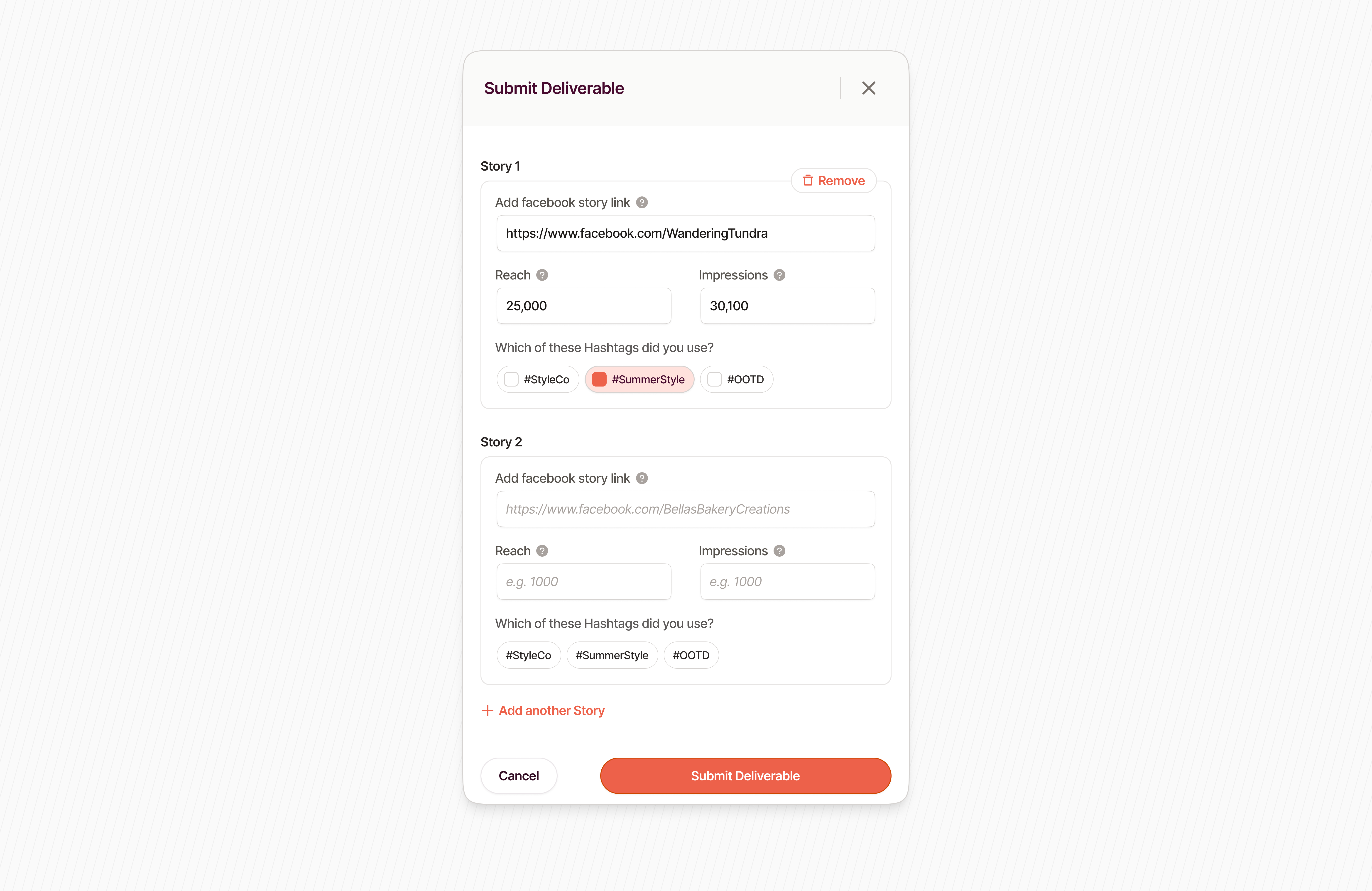
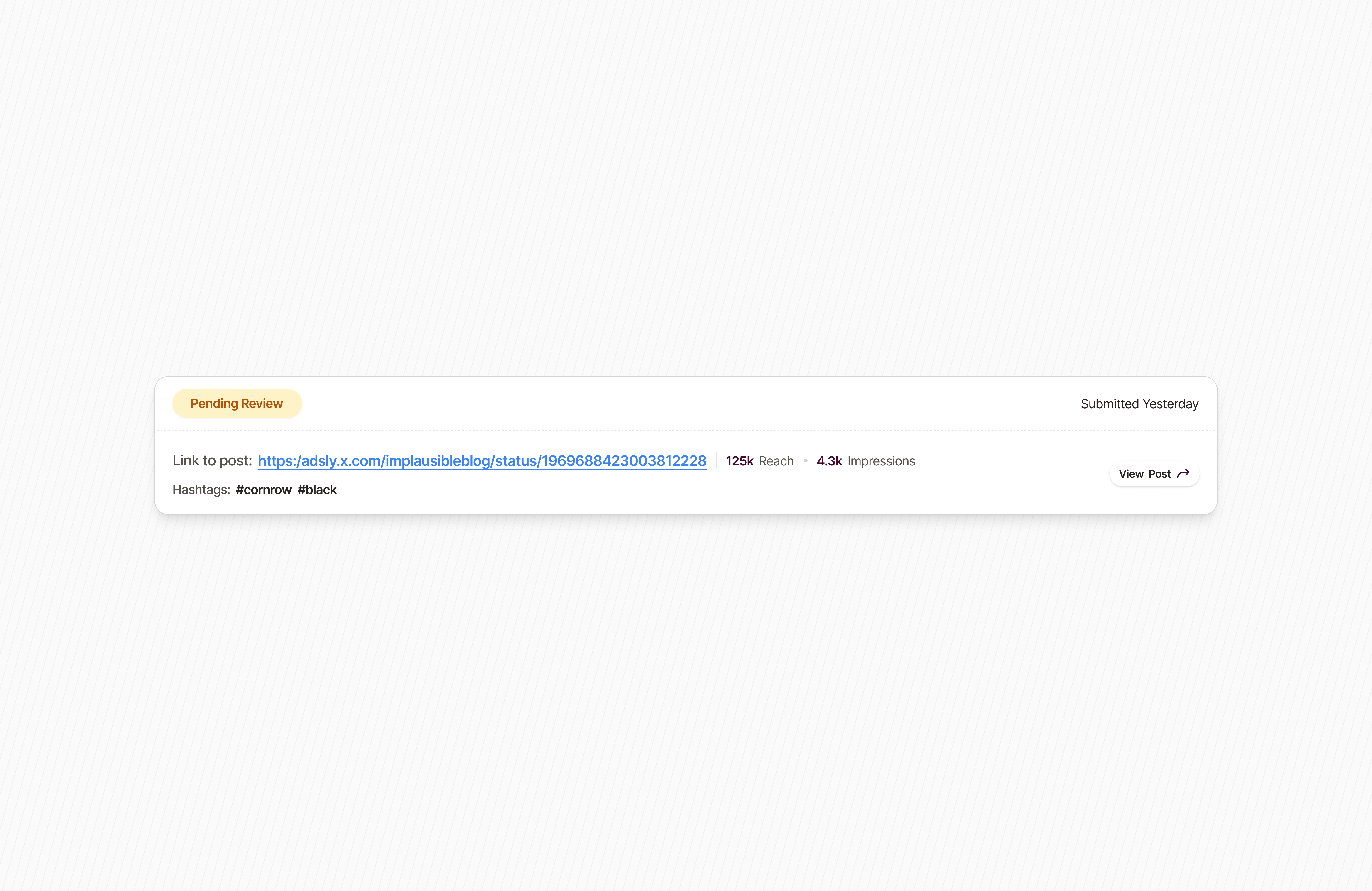
- —Submitted State: Creator publishes content on their platform (Instagram, TikTok, etc.) and submits the post link. Status shows "Waiting for Approval" with timestamp. Brand sees "New submission" with post preview and one-click actions: Accept or Decline.
- —Accepted State: One-click action. Payment releases instantly to creator's wallet. Campaign moves to completed. Budget deducts automatically.
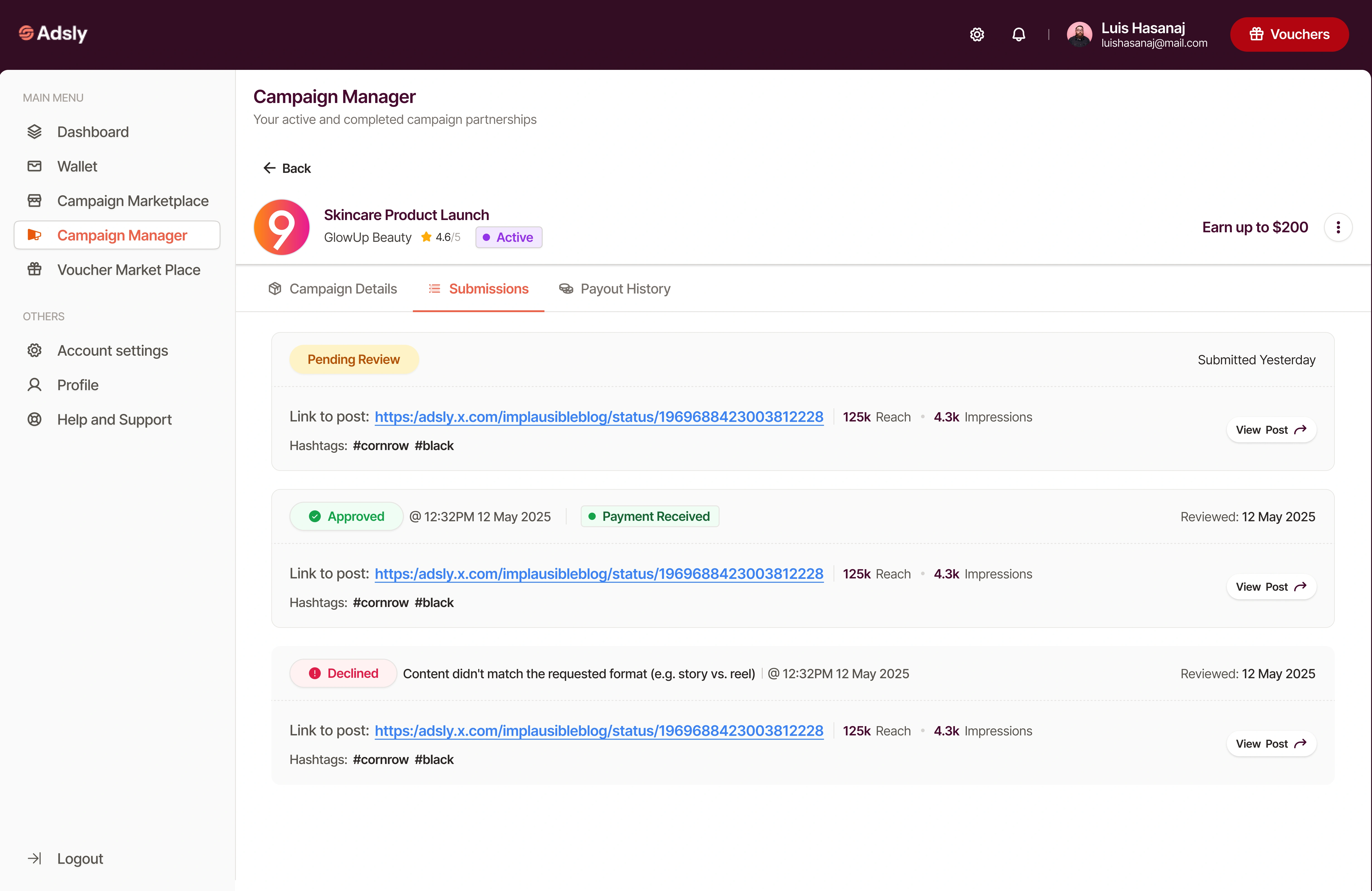
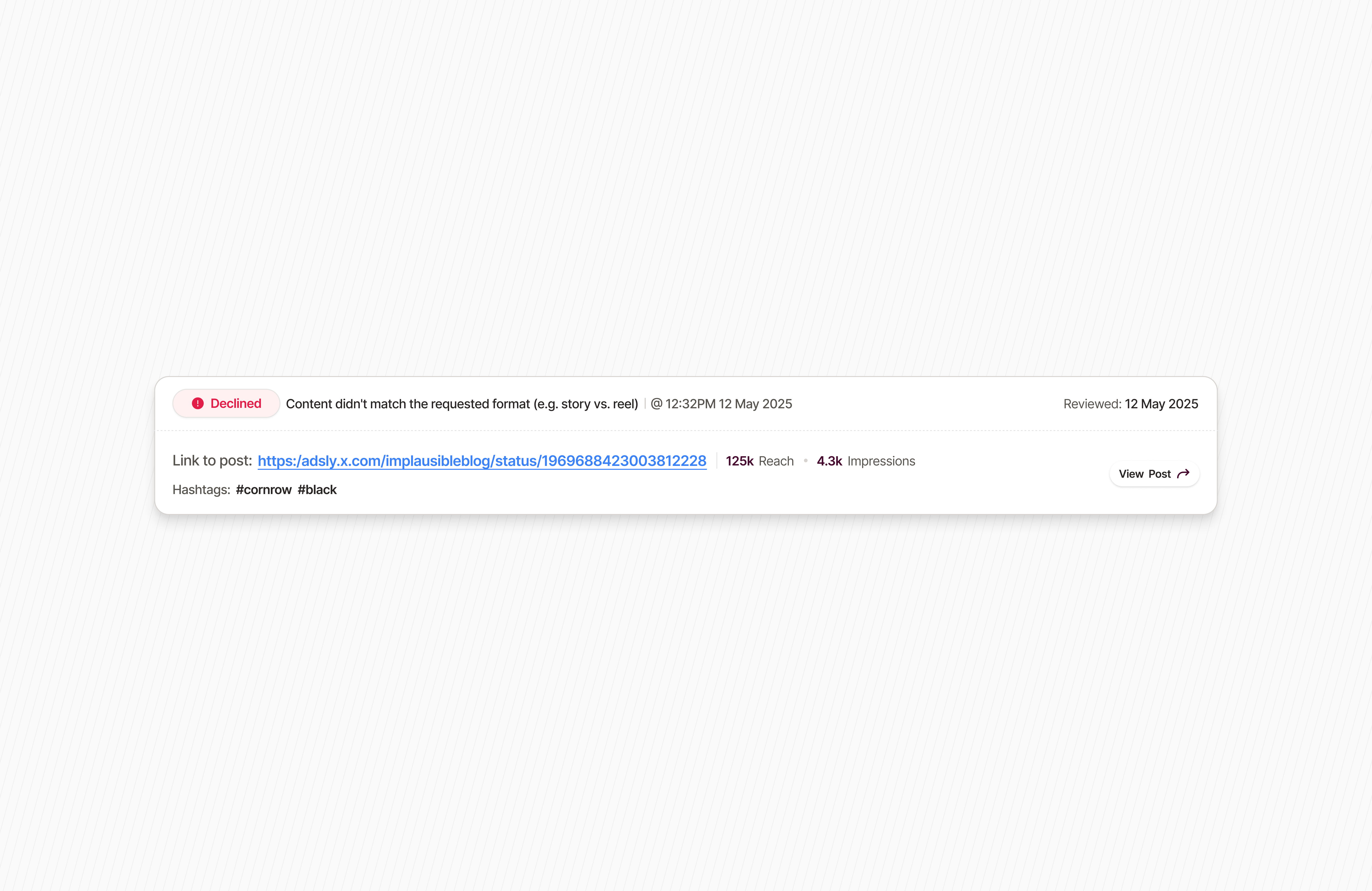
- —Declined State: Requires filling out feedback field explaining why (missing hashtags, doesn't match brief, wrong platform, etc.). Cannot decline silently.
- •
The result: Simplified the entire flow. Both sides knew exactly where they stood. Submissions either met the brief or they didn't, no ambiguity.
What we built
[ solution-4 ]
Design Details That Mattered
- •
Asymmetric friction: Accepting is one click. Declining requires typing. This biases brands toward payment unless there's a specific, articulable reason not to.
- •
Timestamps, not notifications: Both sides see "Submitted Monday, 2:14 PM" or "Waiting 3 days." This creates accountability without nagging.
- •
No intermediate states: We considered adding "Under Review" to show brands had seen submissions. Testing showed creators only cared about the outcome, not the process. Removed it.
This was validated through:
Prototype testing with 25+ creators and 10+ brands
- • 60% reduction in "what happens next?" confusion compared to existing workflow patterns
- •Required feedback on declines tested positively with both user groups
- •Instant payment model was the #1 trust signal for creators
Internal Simulations
- •Projected 40% improvement in campaign completion vs. industry benchmarks
- •Payment dispute scenarios reduced to near-zero through escrow + instant release design
Beta feedback (limited pilot with 39 users)
"I finally don't have to chase brands for updates. I just check the dashboard and know exactly where I stand."
— Creator tester
"The required feedback felt annoying at first, but it forced us to be clearer about why we decline."
— Brand tester
Adsly is set to launch Q2 2026.
What surprised me:
Both brands and creators wanted more constraints, not less. Making feedback required and removing revision loops felt restrictive at first—but users said it made the platform more trustworthy.
What broke early
Optional feedback on declines. Brands didn't use it, creators were left guessing. Making it required reduced arbitrary rejections and improved creator confidence.
What I'd improve:
Proactive matching based on past behavior (acceptance rates, review speed) instead of manual browsing. Better brief-writing guidance for first-time brands to reduce preventable declines.